

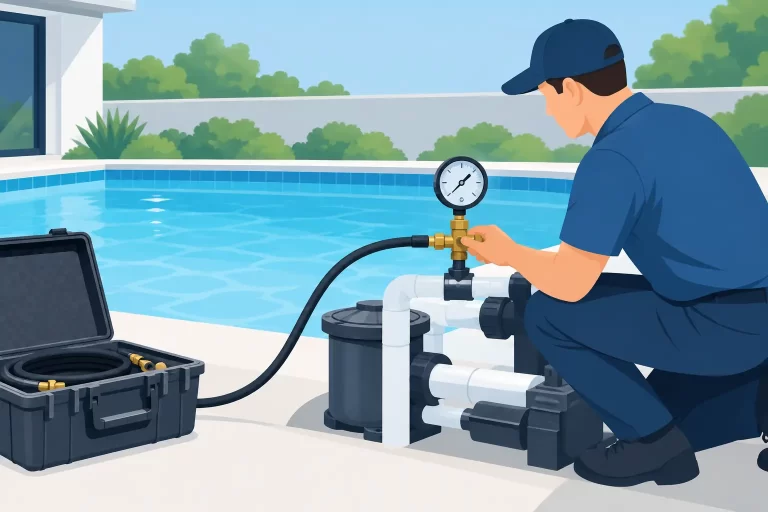
If your pool level keeps falling after you have ruled out a splash-heavy weekend and normal evaporation, the problem may be below the deck. A pool pressure testing service checks whether the plumbing lines that carry water to and from your pool can hold pressure. It is one of the clearest ways to separate a hidden pipe leak from a shell, liner, skimmer, or equipment issue.
For Georgia pool owners, finding the source matters. Water escaping underground can wash out soil, raise water bills, strain pool equipment, and turn a smaller repair into a larger one if it is left alone. Skilled testing gives you evidence before repair work begins, so you can make a decision based on the actual problem rather than a guess.
What a Pool Pressure Testing Service Checks
Pool plumbing is not one single pipe. Depending on the pool, it may include skimmer lines, main drain lines, return lines, cleaner lines, spa lines, water feature plumbing, and lines serving equipment such as heaters or booster pumps. A leak in any one of these can cause ongoing water loss, but the symptoms are not always obvious from the surface.
During a pressure test, a technician isolates an individual plumbing line and introduces controlled air or water pressure. The line is then monitored to see whether it holds steady. If pressure drops, that line may have a break, separation, loose fitting, or other failure that allows water to escape.
The method is especially useful because it narrows the investigation. Instead of excavating based on a hunch, the technician can determine whether a particular line is sound, questionable, or actively leaking. That result helps guide the next diagnostic step and the repair plan.
Pressure testing is not a one-size-fits-all process. The proper test pressure, access points, and isolation method depend on the pipe material, plumbing layout, pool type, and equipment configuration. Older pools can have complicated plumbing runs or prior repairs that require extra care. A qualified technician evaluates those conditions before testing rather than applying the same approach to every pool.
Signs Your Pool May Need Pressure Testing
A pressure test is often appropriate when water loss continues even after basic checks. The strongest clue is a pool that loses more water than a nearby bucket test indicates is normal evaporation. Other signs can include air bubbles returning through the pool, a pump that loses prime, wet or unusually soft spots near the pool or equipment pad, and water loss that changes when the pump is running.
The pump schedule can offer useful information, but it does not provide a final diagnosis by itself. If the pool loses more water while the system runs, a return-side plumbing leak may be more likely. If water loss increases while the pump is off, suction-side plumbing, the shell, fittings, or the waterline area may need closer inspection. Either pattern can overlap with other conditions, which is why testing and inspection work together.
A visible puddle is not required. In Georgia clay soils, water can travel along pipe trenches or settle below the surface without creating a clear wet area. That is one reason concealed leaks deserve a systematic approach.
Pressure Testing Is One Part of Accurate Leak Detection
A failed pressure test identifies a plumbing concern, but it does not always reveal the exact physical location of the leak. The next step may involve acoustic listening equipment, which detects the sound created as pressurized air or water escapes underground. Technicians may also inspect accessible pipes, fittings, valves, and the equipment pad.
When plumbing lines hold pressure, the focus shifts elsewhere. Dye testing can help identify leaks around fittings, skimmers, lights, steps, tile, or cracks. A vinyl liner pool may need inspection for small tears or separation around seams and fittings. Concrete and fiberglass pools require a close look at the shell, structural areas, and penetrations where plumbing connections pass through the pool wall.
Thermal imaging may also help in certain situations by identifying temperature differences associated with moisture. No single tool is right for every leak. The value comes from using the findings together to eliminate possibilities and confirm the repair area.
This is where a diagnostic-first company can save homeowners from unnecessary work. Coastal Pool Repairs and Leak Detection combines pressure testing with acoustic listening, dye testing, equipment inspection, and repair capability, so the same team can move from documented findings to a practical repair scope.
What to Expect During the Appointment
A professional service visit generally starts with questions about your water-loss pattern, recent repairs, equipment behavior, and the age of the pool. Details such as whether the loss started after a freeze, landscaping project, renovation, or equipment replacement can help direct the inspection.
The technician will inspect the pool and equipment, then determine which lines should be tested. Some equipment may need to be shut down or isolated during the process. Pressure testing itself does not normally require draining the pool, although access to certain fittings or repair areas can affect the work involved.
After testing, you should receive a clear explanation of the findings. A good diagnosis distinguishes between confirmed leaks, areas that need further evaluation, and lines that tested sound. That distinction matters. A line that holds pressure may not need repair, while a failed line may still need electronic locating or targeted exposure before the exact repair cost is known.
What Happens If a Line Fails the Test?
A failed line does not automatically mean your entire pool deck must be removed. Modern leak detection aims to locate the failure as precisely as conditions allow. Once the probable location is identified, the repair may involve targeted excavation, replacing a damaged section of pipe, correcting a failed fitting, repairing a valve connection, or rerouting a line when direct access is impractical.
The best option depends on where the line runs, how deep it is, the condition of the surrounding plumbing, and whether prior repairs have weakened the area. Targeted repair usually means less disruption, but rerouting can be the better long-term choice when an old line has multiple failures or sits beneath difficult-to-access structures.
For pool owners, transparency matters most at this point. Diagnostic work should lead to a defined repair recommendation and estimate, not pressure to approve a broad repair without an explanation. Ask what was tested, what failed, how the repair location was determined, and whether the proposed work includes restoring the affected area.
Cost Factors for Pressure Testing and Repair
The cost of a pool pressure testing service varies because pools are built differently. A straightforward test on an accessible line is not the same as diagnosing multiple lines in a pool with a spa, water features, an in-floor cleaner, or aging equipment. Access to fittings, the number of plumbing circuits, and whether advanced locating is needed also affect the diagnostic scope.
Repair costs depend less on the test itself and more on what the test reveals. A connection at the equipment pad is generally simpler to address than a broken line beneath decking, landscaping, or a retaining wall. The condition of the pipe and the need for concrete removal, excavation, pipe replacement, or surface restoration all matter.
The lowest initial price is not always the lowest overall cost. Incomplete testing can lead to repeated visits, unnecessary demolition, or repairs made to the wrong area. A detailed estimate based on documented findings gives you a more reliable basis for comparing options.
Frequently Asked Questions About Pool Pressure Testing
Can I pressure test pool plumbing myself?
Homeowners can perform basic water-loss checks, but pressure testing requires the right plugs, gauges, access methods, and knowledge of safe pressure limits. Applying too much pressure or isolating a line incorrectly can damage older plumbing or create misleading results. Professional testing is the safer choice when underground plumbing is suspected.
Will pressure testing find every pool leak?
It can confirm whether a plumbing line is leaking, but it is not designed to find every type of leak. A tear in a vinyl liner, a failed skimmer throat, a crack in the shell, or a leak around a light niche may require dye testing and visual inspection instead. Accurate diagnosis often uses more than one method.
Should I keep running my pump if I suspect a plumbing leak?
It depends on the symptoms. If the pump is losing prime, drawing air, or the water level is falling quickly, continued operation can place added stress on equipment. Turning the system off until a technician evaluates it may be appropriate, but do not leave a pool unattended long enough for the water level to fall below the skimmer or other critical fittings.
A hidden plumbing leak rarely gets more convenient with time. If your water level is dropping beyond normal evaporation, start with a measured water-loss check and arrange a qualified inspection. Clear testing results let you protect your pool, your property, and your repair budget with confidence.
