

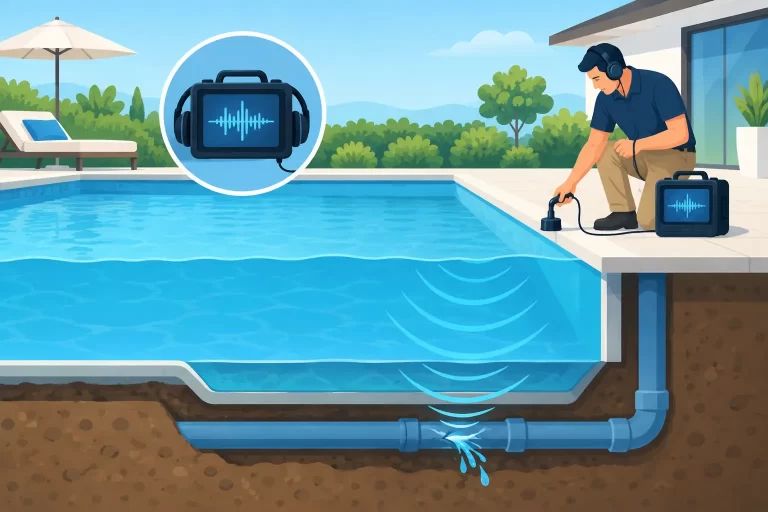
A pool that needs a hose every few days is not always losing water through a visible crack or a worn liner. Often, the problem is buried in a return line, suction line, or other section of underground plumbing. Acoustic pool leak detection gives trained technicians a way to listen for that hidden water movement and narrow down the source before unnecessary digging begins.
For Georgia homeowners, fast answers matter. Water loss raises chemical and heating costs, can strain equipment, and may eventually wash out soil around plumbing or beneath the pool deck. The right diagnostic process identifies what is leaking, where it is leaking, and whether a repair is actually needed before work is approved.
What Acoustic Pool Leak Detection Does
Acoustic testing is a specialized method used primarily to locate leaks in pressurized pool plumbing. A technician first isolates and pressure tests individual lines, such as skimmer, main drain, return, cleaner, spa, or water-feature lines. If a line will not hold pressure, that provides evidence of a plumbing leak.
The acoustic portion helps refine the location. With the plumbing line pressurized, water or air escaping through a break can create a distinct sound underground. Sensitive listening equipment picks up the frequency and intensity of that sound. The technician moves along the suspected plumbing route, comparing readings to identify the strongest signal.
It is not simply a matter of placing a device on the deck and receiving an exact repair address. Soil type, pipe depth, landscaping, concrete, nearby traffic, and the size of the leak can affect what can be heard. Used with pressure testing and a physical inspection, however, acoustic listening can dramatically reduce the amount of concrete, decking, or yard that needs to be opened for repair.
When a Hidden Plumbing Leak Is Likely
Evaporation is normal, particularly during hot, dry, or windy Georgia weather. Splash-out and backwashing also lower the water level. But consistent water loss that continues when the pool is not being used deserves closer attention.
A plumbing leak becomes more likely when water loss changes based on whether the pump is running. If the pool loses noticeably more water while the system is on, a pressurized return line may be involved. If loss increases when the pump is off, a suction-side line, shell issue, skimmer problem, or structural leak may be worth investigating.
Other warning signs include air bubbles returning to the pool, a pump that loses prime, wet or unusually soft ground near the equipment pad, declining filter pressure, or persistent difficulty maintaining the water level. None of these symptoms proves one specific failure. They do tell a qualified technician where to begin testing.
Why guessing can lead to the wrong repair
Homeowners sometimes replace a pump seal, add leak sealer, caulk around tile, or schedule a liner repair based on what seems most likely. Those steps can be appropriate when the cause is known. Without testing, though, they can also spend money without stopping the loss.
A pool may have more than one issue. A vinyl liner can have a small tear while an underground return line also leaks. A skimmer crack may be visible, but it may not be the reason the water level keeps falling. Diagnostics separate the symptoms from the actual repair scope.
The Testing Process: More Than Listening
Acoustic equipment is one part of a complete leak detection visit. A dependable diagnosis starts with observing the pool, equipment, water level, and operating conditions. The technician evaluates the shell or liner, tile line, skimmers, fittings, drains, lights, plumbing connections, pump, filter, and valves.
Pressure testing is often the next step for suspected plumbing leaks. Individual lines are isolated and tested rather than treating the entire circulation system as one unit. This matters because it identifies which line is failing. Once a loss of pressure is confirmed, acoustic listening can help locate the break with greater precision.
Dye testing may be used around suspected cracks, fittings, steps, drains, skimmer throats, and liner damage. The dye is placed near a suspected opening and observed for movement toward it. Thermal imaging can also support the investigation in certain conditions by identifying moisture patterns below or around surfaces.
The best method depends on the pool. A concrete pool with aging plumbing may call for a different approach than a fiberglass pool or a vinyl liner pool. Access matters too. A line beneath open lawn is simpler to repair than one that runs below a patio, retaining wall, or densely landscaped area.
What Happens After the Leak Is Located
Finding a leak should lead to a clear repair plan, not another round of uncertainty. Once the likely location and failure type are documented, the homeowner should understand what needs to be opened, what component will be repaired or replaced, and what restoration is included.
For an underground plumbing leak, repair may involve exposing a focused area of pipe, removing the damaged section, installing new pipe and fittings, and pressure testing the repair before the area is closed. The final restoration depends on where the line is located. Soil and turf restoration are different from concrete or deck repair, and that distinction should be discussed before work begins.
Not every detected leak requires the same response. A loose fitting may be repaired at the pool wall or equipment pad. A failed flex pipe section may require excavation. In some cases, rerouting a line is more practical than breaking through a large area of deck. The right choice balances reliability, access, repair cost, and the condition of the rest of the plumbing.
Coastal Pool Repairs and Leak Detection approaches the process with documented findings and transparent estimates, so homeowners can make an informed repair decision before work starts.
Why Professional Equipment and Experience Matter
Acoustic leak detection is highly technical because pools are noisy systems. Pumps, heaters, water features, electrical equipment, road noise, and even wind can interfere with listening. A faint signal may come from a small plumbing break, while a louder sound may be caused by water moving through a nearby fitting or valve.
Experience helps distinguish useful data from background noise. It also prevents a technician from relying on one test alone. A pressure loss, acoustic signal, dye response, visual evidence, and the pool’s water-loss pattern should point to the same conclusion whenever possible.
Professional testing can also protect the pool. Improperly pressurizing a line, forcing air into plumbing without the right controls, or blindly excavating near pool structures can create additional damage. A trained technician uses the appropriate equipment and procedures for the pool’s material, plumbing layout, and equipment configuration.
Questions Homeowners Commonly Ask
Can acoustic testing find every pool leak?
No. Acoustic testing is most effective for leaks in plumbing lines that can be isolated and pressurized. It may not be the right tool for a liner tear, surface crack, leaking light niche, failing skimmer, or water loss caused by evaporation. That is why a complete inspection and multiple testing methods are valuable.
Do I need to drain the pool before leak testing?
Usually, no. In fact, the water level and operating condition can provide useful clues. A technician may ask that the pool remain at a certain level or that equipment be left off before the appointment, depending on the symptoms being investigated.
How long does detection take?
It depends on the pool’s plumbing complexity, accessibility, and the type of leak. A straightforward issue may be identified during one service visit. A pool with several lines, a spa, water features, or multiple suspected leak points can require more extensive testing.
Will the deck have to be cut?
Not always. Acoustic listening and line isolation are used to minimize exploratory digging and unnecessary deck removal. Still, if the failed pipe is under concrete, access may be required for a lasting repair. A trustworthy repair plan explains that possibility upfront rather than promising a no-dig solution that may not be realistic.
If your water level keeps dropping, avoid treating the pool as a guessing game. Record how quickly the water falls, note whether it changes with the pump on or off, and schedule professional testing before a small hidden leak becomes a larger repair beneath your yard or deck.
