

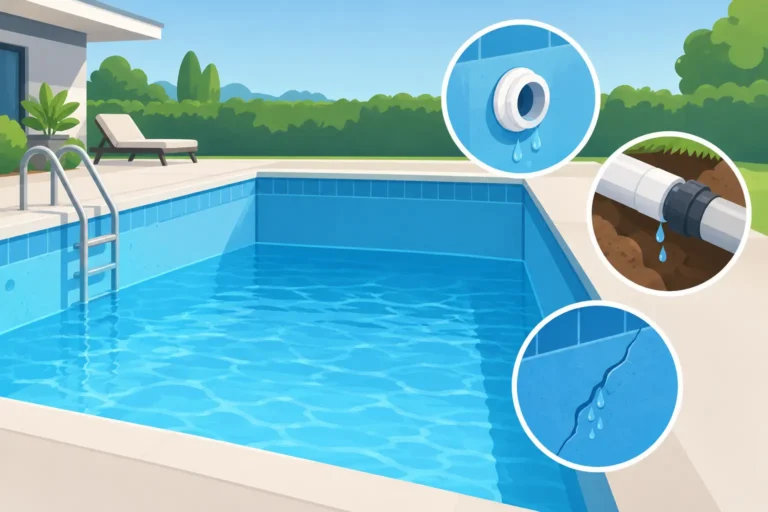
A pool that drops an inch or two can turn a normal weekend of swimming into a real concern quickly. If you are wondering why your pool is losing water, the answer may be ordinary evaporation, but it can also be a concealed leak in the liner, shell, plumbing, skimmer, or equipment. The difference matters. Replacing water without finding the cause can increase water and chemical costs while allowing a small repair to become a larger one.
For Georgia pool owners, heat, sun, humidity changes, storms, and frequent pool use all affect the water level. A careful check helps separate normal loss from a problem that needs professional testing.
Why Is Your Pool Losing Water Beyond Normal Evaporation?
Every pool loses some water to evaporation. During a hot Georgia summer, a pool can lose roughly one-quarter to one-half inch per day, particularly when it is uncovered, exposed to direct sun, or used often. Splash-out from swimmers, cannonballs, pets, and pool toys can add to that total.
Wind, low humidity, and a heated pool can speed evaporation up. A pool cover slows it down, although it will not correct a leak. Rain can also hide water loss for a few days, making a problem appear to come and go.
Water loss becomes more suspicious when the level consistently drops more than expected, when you add water every few days, or when the loss continues during mild weather with little pool use. A pool that stops losing water at the same level repeatedly is also giving you a useful clue. The leak may be near the level where the water settles, such as a skimmer throat, return fitting, light niche, crack, or liner seam.
Start With a Simple Bucket Test
Before assuming the pool has a leak, use a bucket test to compare the pool’s water loss with evaporation. It is a helpful screening step, not a substitute for a full leak inspection.
Fill a clean bucket with pool water and place it on a pool step so the water inside the bucket is close to the pool water level outside it. Mark both water levels with a pencil or waterproof tape. Turn off the automatic fill device if you have one, avoid swimming, and let the pool sit for 24 hours.
If the pool and bucket drop by about the same amount, evaporation is the likely explanation. If the pool level drops noticeably farther than the bucket level, the pool is losing water somewhere else.
For another useful comparison, repeat the test with the pump running and then with it off. More loss while the system is running can point toward a pressure-side plumbing leak, a return line issue, or equipment that leaks only under pressure. More loss with the pump off may indicate a suction-side plumbing issue, a structural leak, or a leak at a fitting below the waterline. These results are clues, not a final diagnosis, because some leaks behave differently depending on the system and pool design.
Common Places a Pool Leak Develops
Vinyl liners and fittings
A vinyl liner can develop a small tear, puncture, separated seam, or leak around a return fitting, main drain, or stair attachment. Some liner damage is easy to see, but small holes can be difficult to locate, especially in patterned liners or areas hidden by wrinkles and debris.
Do not drain a vinyl liner pool to look for a leak unless a qualified pool professional directs you to do so. Groundwater pressure and liner movement can create additional problems when the water is removed.
Concrete, fiberglass, tile, and skimmers
Concrete pools may lose water through cracks, deteriorated grout, damaged plaster, failed expansion joints, or gaps around penetrations. Not every surface crack leaks, but a crack that changes, widens, or aligns with water loss deserves attention.
Fiberglass pools can have issues around fittings, plumbing connections, skimmers, lights, or areas of shell damage. Tile pools often show trouble at cracked tile, loose coping, failed grout, or the joint where the deck meets the pool structure. A skimmer can also crack where it connects to the pool, allowing water to escape behind the wall.
Underground plumbing
Pool plumbing is out of sight, which is why it can be frustrating to diagnose without the right equipment. Aging pipes, failed fittings, shifting soil, freeze damage, and roots can all contribute to a leak. Wet or unusually soft ground near the pool pad, air bubbles returning to the pool, a pump that loses prime, or a persistent drop in water level may indicate a plumbing concern.
A plumbing leak does not always create a visible puddle. Water can travel through soil or drain away before it reaches the surface.
Equipment and pool pad leaks
Some water loss occurs where homeowners can see it: at the pump lid, pump seal, filter tank, multiport valve, heater, chlorinator, unions, or plumbing connections. Inspect the equipment pad while the system is running. Look for drips, spray, standing water, mineral buildup, or damp soil below the equipment.
A small equipment leak should still be addressed. Besides wasting water, it can affect circulation, strain equipment, and create an electrical or slip hazard around the pool area.
What Not to Do When Water Is Dropping
Continually filling the pool is understandable, but it can disguise how fast the loss is occurring and make diagnosis harder. Keep a simple record of the water level, weather conditions, and whether the pump was running. Photos of the waterline tile or skimmer opening can help document the change.
Avoid adding excessive chemicals to compensate for diluted water. Fresh fill water changes the pool’s chemistry, and repeated top-offs may require a more deliberate balancing approach. If the level falls below the skimmer opening, turn off the pump before it begins drawing air. Running a pump without adequate water can damage it.
It is also wise not to use stop-leak products as a first response. These products can occasionally help in limited circumstances, but they may not solve a significant leak and can create problems for filters, heaters, and plumbing. A confirmed source gives you a far better repair decision.
How Professional Leak Detection Finds the Source
A reliable diagnosis starts with inspecting the pool, water level, visible fittings, shell or liner, and equipment. From there, the testing method depends on what the early findings suggest.
Dye testing can show whether water is being drawn into a crack, fitting, light niche, or suspected liner defect. Pressure testing isolates plumbing lines and checks whether they hold pressure. Acoustic listening equipment can help locate sounds associated with a leak in underground plumbing, while thermal imaging may identify temperature differences caused by escaping water in certain conditions.
The goal is not to use every test on every pool. It is to use the right diagnostic method for the pool type and the symptoms present. That approach helps prevent unnecessary digging, liner work, or equipment replacement.
At Coastal Pool Repairs and Leak Detection, trained technicians document findings and explain the repair scope before work begins. That clarity is especially valuable when a leak is concealed behind a pool wall, under decking, or in an underground line.
When to Schedule Leak Detection
Schedule professional help when the bucket test points to a leak, the water level is dropping rapidly, or the loss has continued for more than a few days without a clear explanation. It is also time to call when you see wet soil near plumbing, notice air in the system, find damage to a liner or shell, or cannot maintain the water level above the skimmer.
The urgency depends on the amount of water loss and where it is occurring. A slow leak may not be an emergency, but it should not be ignored through an entire season. A rapid loss, exposed plumbing, failing equipment, or water approaching electrical components needs prompt attention.
Can a pool leak only when the pump is on?
Yes. A pressure-side line, return fitting, filter, heater, or other equipment component may leak only while water is circulating under pressure. Comparing water loss with the pump on and off provides helpful information.
Does a pool always show visible signs of a leak?
No. Many plumbing leaks remain underground, and water may move through soil without creating a surface puddle. Specialized testing is often needed to narrow down the location.
Will a leak get worse if I wait?
It can. Soil movement, water erosion, added stress on equipment, and ongoing chemical and water costs can turn a minor issue into a more involved repair. Finding the source early gives you more control over the repair decision.
A steady waterline is more than a cosmetic detail. If your pool is asking for water more often than it should, record what you are seeing, protect the equipment from running dry, and get a clear diagnosis before the loss has a chance to grow.
