

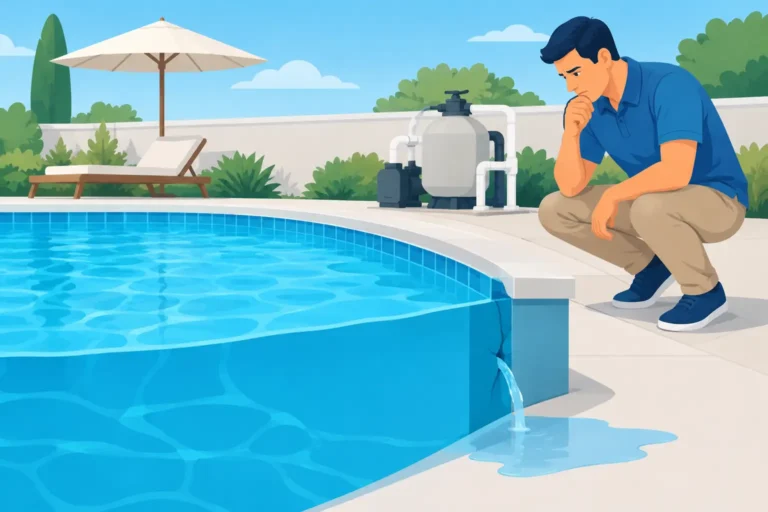
A pool that needs an extra inch or two of water may not look like an emergency. But homeowners often ask, can pool leaks worsen if they wait a few weeks? In many cases, yes. What begins as a small loss around a fitting, plumbing line, skimmer, liner seam, or shell crack can expand as water movement, ground conditions, and normal pool operation put more stress on the damaged area.
The concern is not only the water bill. Escaping water can wash away supporting soil, affect nearby decking, force equipment to work harder, and turn a contained repair into a larger project. The right response is not to guess at the source or start sealing random areas. It is to confirm whether the pool is leaking, identify where the water is leaving, and repair the actual failure.
Can Pool Leaks Worsen Over Time?
Some leaks remain relatively steady for a while, especially a small puncture in a vinyl liner or a minor issue at a light niche. Others worsen quickly. The difference depends on the pool type, the location of the leak, soil movement, weather, water pressure, and whether the leak is on the suction side or pressure side of the plumbing system.
A pressurized return line can lose more water while the pump is running. A suction-side leak may pull air into the system rather than visibly push water into the ground, causing the pump to lose prime, run noisily, or produce weak circulation. A crack in a concrete pool shell may open and close with temperature changes or shifting soil. In a vinyl liner pool, a small tear can lengthen when swimmers, automatic cleaners, or water movement tug on the material.
Georgia’s changing weather can add to the problem. Heavy rain saturates the soil around a pool, while dry periods can cause ground movement. Either condition may place additional pressure on underground plumbing and pool structures. Freezing conditions, when they occur, can also aggravate already weakened pipes, fittings, and tile lines.
Why a Small Leak Can Become a Larger Repair
Water always follows the easiest path. Once it finds a route through a damaged pipe, loose fitting, cracked skimmer throat, failed seal, or compromised shell area, it can gradually erode the material and soil around that opening.
Soil loss can affect the pool and deck
An underground plumbing leak does not simply disappear into the yard. Water can wash away soil that supports the pool deck, plumbing trenches, or the area around the pool shell. Over time, that void can contribute to settling, cracks in surrounding concrete, loose coping, or hollow spots beneath the deck. Not every leak creates this type of damage, but it is one reason early diagnosis is usually less costly than waiting.
Low water can damage equipment
When water drops below the skimmer, the circulation system may begin pulling air. A pump that runs dry or repeatedly loses prime can overheat and suffer seal or motor damage. Low water can also affect automatic cleaners, heaters, salt systems, and filtration performance. The original leak may be modest, but operating a pool with insufficient water can create a separate equipment repair.
Surface damage may spread
On plaster, concrete, and tile pools, water entering behind finishes or through cracks can loosen material over time. On vinyl liner pools, a small tear or failed seam can become more visible as the liner shifts. Fiberglass pools can develop issues around fittings, steps, or plumbing penetrations that need close inspection rather than a surface-level patch.
The trade-off is straightforward: not every water-loss issue requires a major repair, and evaporation is normal. But waiting for a leak to become obvious can limit repair options and increase the scope of work.
Signs Your Pool Is Losing More Than Evaporation
Evaporation varies with sunlight, wind, humidity, water temperature, and pool use. In hot Georgia weather, some water loss is expected. The concern is a pattern that does not match normal conditions.
Watch for a water level that drops faster than usual, frequent refilling, air bubbles in the return lines, a pump basket that will not stay full, wet or unusually soft ground near equipment, or cracks developing in the deck. You may also notice that the water level stops dropping at the same point. That can be a useful clue. If it stops near the skimmer, tile line, light, return fitting, or step, the leak may be near that elevation.
A bucket test can help separate evaporation from a likely leak. Fill a bucket with pool water and place it on a pool step so the water inside the bucket is close to the pool’s water level. Mark both levels, then compare them after 24 hours with the pump off. If the pool loses noticeably more water than the bucket, a leak is likely. Repeat the test with the pump on if needed. This does not locate the leak, but it provides a clearer reason to schedule testing.
Finding the Leak Before Repairing It
The visible symptom is water loss. The actual source may be in the plumbing, equipment pad, liner, skimmer, lights, returns, drains, shell, or an area hidden beneath the deck. That is why a qualified diagnosis matters before approving repairs.
A technician may begin with a detailed inspection of the pool shell, liner, fittings, skimmer, pump, filter, valves, and equipment connections. Dye testing can reveal whether water is being pulled into a crack or gap around a suspected area. Pressure testing helps determine whether plumbing lines are holding pressure. Acoustic listening equipment can assist in locating underground line leaks, while thermal imaging may help identify moisture patterns in appropriate conditions.
No single test is right for every pool. A vinyl liner leak may require close visual inspection and dye testing. A concrete pool with unexplained water loss may need shell inspection, plumbing pressure testing, and testing around structural penetrations. The goal is to document the source rather than recommend a repair based on assumptions.
What to Do While You Wait for Leak Testing
Keep the water level high enough for safe circulation, but avoid continuously overfilling the pool. If the level is approaching the skimmer opening, turn off the pump before it begins drawing air. Do not add repeated doses of chemicals to compensate for untreated water loss without checking levels carefully, since concentrated or imbalanced water can create additional surface and equipment concerns.
Take photos of wet areas, deck cracks, equipment drips, and the waterline each day. Note whether water loss changes when the pump runs. These observations can help narrow the diagnostic process, but they should not replace professional testing.
Avoid using sealants, leak-stop additives, or improvised patches before the source is confirmed. Some products can interfere with water chemistry, clog equipment, or make a proper repair more difficult. A temporary patch may have a place after diagnosis, especially for a liner issue, but it should be selected for the specific problem.
When to Call for Professional Help
Schedule leak detection when the pool consistently loses more water than evaporation, equipment begins pulling air, the water level falls below safe operating height, or you see wet ground around plumbing or the pool deck. A faster response is especially wise if the pool is losing several inches per week, if the leak appears connected to a pressure line, or if you notice deck movement or soil erosion.
Coastal Pool Repairs and Leak Detection uses diagnostic methods such as pressure testing, acoustic listening, dye testing, thermal imaging, and detailed pool inspections to identify the cause before recommending repair. That approach gives homeowners a clearer picture of what needs to be fixed, what it may cost, and why the repair is necessary.
Will a pool leak eventually stop on its own?
Sometimes the water level stops at the height of the leak, but that does not mean the problem is resolved. It may simply indicate the location of the opening. Once the pool is refilled or the pump operates, water loss can resume.
Is every pool water loss issue a leak?
No. Evaporation, splashing, backwashing, and a loose waste valve can all lower the water level. Testing is valuable because it distinguishes normal loss and operational issues from a concealed plumbing, liner, or structural leak.
Can I keep using the pool if it has a leak?
It depends on the severity and location. Minor water loss may allow limited use while testing is scheduled, but a pool with unsafe water levels, electrical concerns, significant structural damage, or a leaking pressure line should not be treated as business as usual.
A leak rarely becomes cheaper by being ignored. Pay attention to the pattern, protect the equipment, and have the source identified while the repair is still within your control.
