

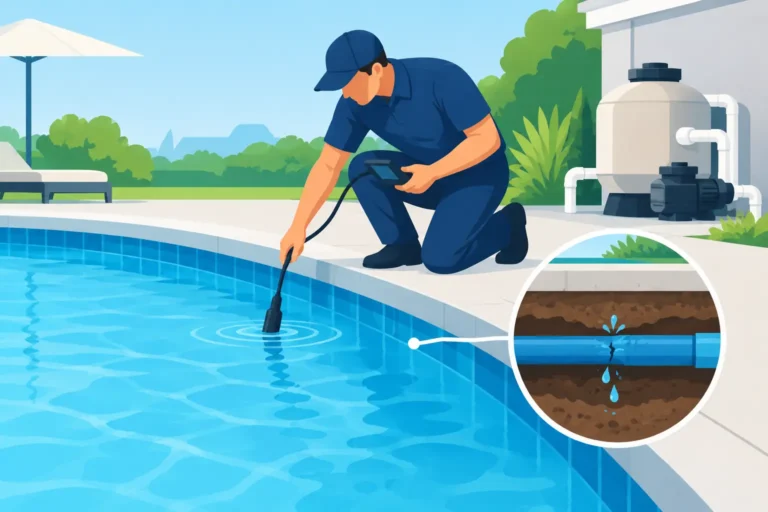
A pool that needs an inch or more of replacement water every few days is not just inconvenient. It can raise water and chemical costs, strain equipment, soften soil around the pool, and turn a small plumbing failure into a larger repair. Effective pool leak detection methods do more than confirm that water is disappearing. They identify where it is leaving and help determine the most sensible repair.
For Georgia pool owners, evaporation can be misleading during hot, dry weather. But a sudden change in water loss, a wet area near the pool, air returning through the jets, or a pump that will not hold prime deserves a closer look. The right diagnostic approach depends on whether the issue is in the pool shell, vinyl liner, plumbing, skimmer, fittings, or equipment pad.
Start by Separating Evaporation From a Leak
Before testing individual components, a technician needs to establish whether the water loss is outside the normal range. The bucket test is a useful first screen. A bucket is placed on a pool step with its water level matching the pool water level on the outside of the bucket. After 24 hours with the pump in its normal operating condition, the difference between the two water levels can indicate whether the pool is losing more water than evaporation alone would explain.
This test is helpful, but it does not locate a leak. Wind, rain, bather use, automatic fill systems, and a solar cover can all affect the result. It is also wise to repeat the test with the circulation system off. If the pool loses noticeably more water while the pump is running, the plumbing on the pressure side may be involved. If water loss slows when the pump runs, a suction-side line or equipment issue may be more likely.
The water level itself can also offer a clue. When a pool consistently stops losing water at the same height, the leak may be near that level – perhaps at a skimmer throat, return fitting, light niche, tile line, or a liner seam. It is a clue, not a diagnosis, and that distinction matters before authorizing repair work.
Pool Leak Detection Methods Used by Professionals
A complete leak inspection is usually a process of elimination. Pool construction, the location of water loss, and the behavior of the circulation system guide which test comes first.
Visual inspection of the shell, liner, and equipment
A detailed visual inspection is the foundation of every diagnosis. On a concrete or fiberglass pool, technicians look for cracks, deteriorated plaster, loose tiles, failed expansion joints, separation around fittings, and damage near steps or drains. On vinyl liner pools, they inspect seams, corners, stair sections, fittings, wrinkles, and areas that may have been punctured or stretched.
The equipment pad is inspected at the same time. A leaking pump seal, filter tank, multiport valve, heater connection, chlorinator, or union can lose water only while the system is operating. Some leaks are obvious. Others evaporate from hot equipment or drain into the ground before they leave a visible puddle.
Dye testing around suspected openings
Dye testing is a precise method for confirming leaks at a visible or suspected location. With the water still, a technician releases a small amount of dye near a crack, fitting, skimmer, light niche, drain cover, or liner defect. If there is an opening, the dye will often be drawn toward it.
This method works especially well for localized shell and fitting leaks. It is less useful when water is moving, visibility is poor, or the leak is in an underground pipe. Dye testing should be controlled and deliberate. Randomly adding dye around the pool can create confusion without proving anything.
Pressure testing the plumbing lines
Pressure testing is one of the most reliable pool leak detection methods for concealed plumbing problems. Individual suction and return lines are isolated, pressurized, and monitored for pressure loss. A stable line is less likely to be leaking. A line that loses pressure points to a potential break, failed fitting, or separation underground.
Pressure testing does not always identify the exact spot in the yard, but it narrows the problem to a specific line. That prevents unnecessary digging and helps plan a targeted plumbing repair. It can also distinguish a plumbing leak from a shell or liner issue, which is critical because the repairs are very different.
Acoustic listening for underground leaks
When a pressure test indicates a leaking line, acoustic listening equipment can help locate it. Water escaping under pressure creates a sound or vibration that trained technicians can detect through the deck, soil, or surrounding surfaces. The equipment helps reduce the search area before excavation begins.
Acoustic testing is particularly valuable for underground return lines. Results can vary based on soil type, pipe depth, the size of the break, background noise, and whether the line can hold enough pressure for a clear signal. It is not a shortcut, but combined with pressure testing, it is a practical way to avoid tearing up more deck or landscaping than necessary.
Thermal imaging and moisture investigation
Thermal imaging can reveal temperature differences caused by wet soil, active water movement, or moisture beneath surrounding surfaces. It is a noninvasive tool that can support other findings, especially when a leak is affecting an area near the pool or equipment pad.
Thermal imaging is not a stand-alone answer for every pool leak. Sun exposure, recent rain, underground utilities, and surface materials can influence the image. Used alongside pressure tests, inspection findings, and acoustic equipment, it adds another layer of evidence before repair recommendations are made.
Why the Pump Schedule Changes the Diagnosis
Homeowners often notice water loss but do not track whether it happens while the pump is on, off, or both. That information can save time during a service visit. A leak that worsens with the pump running often points toward pressurized return plumbing, a filter issue, or equipment that leaks under operating pressure.
A leak that is more noticeable with the pump off may involve a suction line, skimmer, main drain line, or a structural opening in the pool. Air bubbles in the pump basket or air blowing from return jets can also indicate a suction-side issue, though a low water level or loose pump lid can produce similar symptoms.
Keep the system operating normally unless there is a clear safety concern, active flooding, or a failing electrical component. Changing valve positions, plugging lines, or running the pump dry can complicate the diagnosis and may damage equipment.
What Happens After the Leak Is Found
The diagnostic report should lead to a clear repair plan, not a vague recommendation to keep watching the water level. A small vinyl liner puncture may be repaired underwater. A failed skimmer connection may require focused concrete work. A broken underground line may call for excavation, a reroute, or a new section of pipe. A crack in a concrete shell may need specialized preparation and repair before resurfacing is considered.
Repair cost depends on access, pool type, the damaged component, material requirements, and whether deck removal or excavation is necessary. The lowest initial estimate is not always the best value if it relies on guessing. Documented findings and a clear explanation of the repair scope give homeowners a better basis for deciding how to proceed.
Coastal Pool Repairs and Leak Detection uses a diagnostic-first approach because identifying the actual failure before opening a deck, replacing a liner, or changing equipment protects both the pool and the homeowner’s budget.
When to Schedule a Leak Inspection
Schedule professional testing when you are adding water repeatedly, your water level drops faster than normal evaporation, the ground near the pool stays damp, or your pump begins losing prime. Do not wait for a small issue to become visible damage. Underground leaks can wash out soil, and persistent shell or liner leaks can worsen as water moves behind the pool surface.
If you have already tried a bucket test, keep the results and note the water level, pump schedule, recent weather, and any changes in equipment performance. Those details help a technician select the right tests sooner. A careful diagnosis gives you something more useful than a guess: a defined problem, a repair path, and the confidence to get your pool back to normal.
