

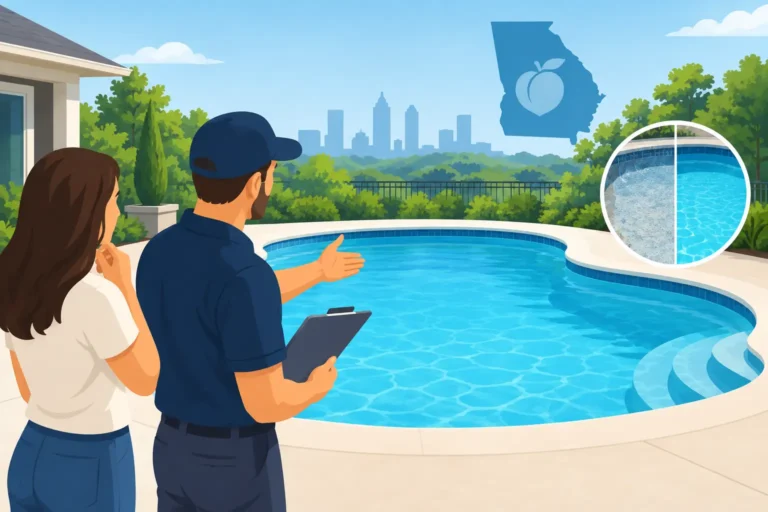
A rough pool finish can make every swim less enjoyable. More importantly, cracks, hollow spots, loose tile, stains that will not lift, and recurring water loss may point to problems below the surface. Choosing the right pool resurfacing contractor in Georgia is not simply about selecting a new color or finish. It is about determining what has failed, repairing it correctly, and preparing the pool shell so the new surface has a real chance to last.
Georgia pools face long hot seasons, heavy rain, changing ground conditions, and constant chemical exposure. Those conditions can be hard on plaster, tile lines, coping, skimmers, and underground plumbing. A qualified contractor should help you separate surface wear from a deeper structural or circulation issue before renovation work begins.
Start With the Reason Your Pool Needs Resurfacing
Pool resurfacing is often the right answer when a concrete or gunite pool has etched plaster, stubborn staining, discoloration, roughness, delamination, or an aging finish that is nearing the end of its service life. Depending on the pool and selected material, resurfacing may involve plaster, quartz aggregate, pebble finishes, tile repair, coping work, or selected renovation upgrades.
But a worn appearance alone does not tell the whole story. A pool that needs frequent refilling, develops new cracks, has soft or hollow-sounding areas, or loses water near the skimmer may need more than a new interior finish. Covering an active problem with a new surface can lead to avoidable repair costs later.
Before committing to the project, ask whether the contractor will inspect the shell, fittings, tile line, skimmers, return lines, main drain, plumbing, and equipment. This is especially important if the water level has been dropping faster than normal. Evaporation happens, particularly during Georgia summers, but a consistent drop can signal a leak that should be located and repaired before resurfacing begins.
What a Pool Resurfacing Contractor in Georgia Should Evaluate
A dependable evaluation starts with the pool’s condition, not a finish sample. The contractor should explain what they see, what they recommend, and whether the work is cosmetic, preventative, or necessary to correct damage.
For a concrete pool, that inspection may include checking for plaster separation, cracks, exposed aggregate, damaged tile, failing grout, coping movement, and skimmer deterioration. The technician should also look for evidence that water has been traveling behind the finish or through a structural crack.
If a leak is suspected, diagnostic testing can prevent guesswork. Pressure testing can help identify plumbing line failures. Acoustic listening can help locate concealed leaks in underground lines. Dye testing is useful around fittings, cracks, lights, and skimmers, while detailed visual inspection can identify shell or tile-line concerns. Thermal imaging may be appropriate in certain situations where temperature differences help reveal a moisture issue.
Not every pool needs every test. The right approach depends on the symptoms, pool construction, plumbing layout, and whether the water loss changes when the equipment is running. What matters is that the contractor can explain why a particular test or repair is recommended.
Surface Prep Is Where Long-Term Results Begin
The visible finish gets the attention, but preparation is the part homeowners should ask about most carefully. A high-quality finish cannot make up for loose material, poor bond preparation, unresolved cracks, or a contaminated substrate.
A proper resurfacing scope generally begins by draining the pool safely and removing loose, unsound, or damaged finish material. The shell is then cleaned and prepared to receive the new finish. Any needed crack, bond-beam, skimmer, tile, or fitting repairs should be addressed before the finish application.
The exact process depends on the existing surface and the product chosen. Some pools need more extensive removal than others. A contractor should not promise that every crack can be made permanently invisible, because movement in the shell, soil, or surrounding deck can affect future appearance. They should, however, explain the repair method, the expected result, and any limitations before work starts.
Ask how the crew will protect nearby decking, landscaping, equipment, and drainage areas. Also ask how they will handle start-up after the surface is installed. New finishes require careful filling and water balancing. Improper chemistry during the early curing period can stain, etch, or shorten the life of a new surface.
Compare Estimates by Scope, Not Just Price
Resurfacing estimates can vary substantially, and a lower number is not automatically a better value. Pool size, shape, depth, access, existing surface condition, finish selection, waterline tile, coping repairs, plumbing repairs, and equipment needs all affect the final cost.
A transparent estimate should identify the finish being installed and describe the preparation work, repairs, tile or coping work, drainage needs, start-up procedures, and warranty coverage. If damage is discovered after draining or removing the old finish, the contractor should explain how change orders are handled before additional work proceeds.
It is reasonable to ask whether the estimate includes disposal, surface preparation, materials, labor, chemical start-up, and follow-up guidance. A vague estimate can make it difficult to compare proposals fairly. Clear documentation gives homeowners a better basis for deciding what is included and what could become an additional expense.
Be cautious of a contractor who offers a price without inspecting the pool or asks you to choose a finish before discussing the pool’s condition. Resurfacing is a construction and repair project, not just a coating application.
Choose the Finish for How You Use the Pool
The best pool finish is not always the most expensive one. Traditional plaster can be a practical option for homeowners seeking a clean, classic appearance and manageable initial cost. Quartz finishes can offer greater color consistency and durability. Pebble surfaces are valued for texture, visual depth, and longevity, though they may cost more and feel different underfoot.
Color selection also deserves practical thought. Lighter finishes can make water look bright and may show less heat absorption, while darker finishes can create rich water color but may make staining, scale, or debris more noticeable in some settings. Your contractor should help you consider the pool’s sunlight, landscaping, water chemistry habits, and surrounding deck color.
If your pool is fiberglass or vinyl liner rather than concrete, the word resurfacing can mean something different. Fiberglass may need gelcoat repair, crack repair, or a specialized refinishing process. A vinyl liner pool may require liner repair or replacement rather than a plaster-style surface installation. Work with a contractor experienced in your specific pool type, not one using a one-size-fits-all recommendation.
Questions Worth Asking Before You Hire
A productive conversation with a contractor should leave you with more than a price. Ask whether they perform or coordinate leak detection before resurfacing when water loss is present, how they repair cracks and damaged skimmers, what preparation is included, and who will perform the work.
You should also ask about scheduling, expected project duration, access requirements, weather delays, payment milestones, and workmanship warranty terms. Georgia weather can affect surface work, so a realistic contractor will discuss the schedule honestly rather than making promises they cannot keep.
Look for a company that communicates clearly when conditions change. Once a pool is drained, hidden defects can become visible. That does not mean the contractor did something wrong. It means the contractor should document the finding, explain the options, and obtain approval before moving forward.
When Leak Detection Should Come First
If your pool is losing water, do not assume a new finish will solve it. A leak can occur in the shell, a skimmer, a return fitting, a light niche, a main drain, or an underground plumbing line. Some leaks are obvious. Others only appear when the pump runs, when the water reaches a certain level, or after heavy rain.
A diagnostic-first approach can protect your resurfacing investment. Coastal Pool Repairs and Leak Detection LLC uses testing methods such as pressure testing, acoustic listening, dye testing, and detailed pool inspections to identify the source before repair recommendations are made. Once the cause is clear, the repair and resurfacing plan can be built around the actual condition of the pool.
Frequently Asked Questions
How long does pool resurfacing take?
The timeline depends on pool size, finish type, repair scope, weather, and curing requirements. Straightforward projects may move quickly, while pools needing crack repairs, tile work, plumbing repairs, or extensive preparation take longer. Ask for a project schedule based on your pool rather than a general promise.
Can I resurface a pool with cracks?
Often, yes, but the cracks should be evaluated first. Some are surface-level finish cracks, while others may reflect structural movement or water loss. The repair method should match the cause and severity of the crack.
Will resurfacing stop a pool leak?
It may stop a leak if the water loss comes from a damaged interior finish or repairable shell crack. It will not correct a leaking pipe, failed skimmer connection, damaged fitting, or equipment issue unless those items are repaired as part of the project.
How do I protect a new pool finish?
Follow the contractor’s start-up and water-balancing instructions closely. Maintain appropriate water chemistry, brush as directed during the initial period, and address scale or staining concerns early. Consistent care is usually less costly than correcting chemistry-related surface damage later.
A pool surface should make your backyard feel ready for use again, not leave you wondering what was missed underneath. Before selecting a color or signing an estimate, ask for a clear assessment of the shell, plumbing, and repair needs. That extra attention at the beginning helps protect the finish, the budget, and the time you want to spend enjoying the pool.
