

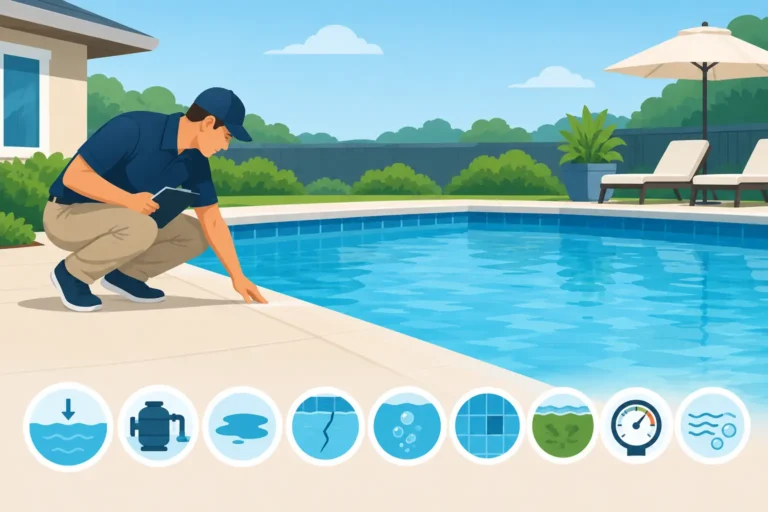
A pool that needs the hose every few days is not just inconvenient. It can be the first of several pool leak symptoms that point to a hidden plumbing failure, a damaged liner, a crack, or a problem around the equipment pad. The sooner the source is identified, the better the chance of avoiding higher water bills, chemical waste, soil erosion, and repair work that grows more extensive over time.
Georgia heat does cause normal evaporation, especially during dry, windy stretches. But evaporation is gradual and generally predictable. A sudden change in water level, wet ground where it should be dry, or air entering the pump system deserves a closer look.
1. Your Water Level Drops Faster Than Normal
The most obvious warning sign is water loss that exceeds normal evaporation. Many pools lose roughly one-quarter to one-half inch of water per day in hot weather, though temperature, wind, pool exposure, and use all affect that number. A pool that is losing an inch or more per day, or that needs frequent topping off despite mild weather, may have a leak.
A simple bucket test can help separate evaporation from a likely leak. Fill a bucket with pool water and place it on a pool step so the water inside the bucket matches the pool water level outside. Mark both water lines, then compare them after 24 hours with the pump operating normally. If the pool level drops more than the bucket level, water is likely escaping somewhere other than through evaporation.
Repeat the test with the pump off if possible. A greater loss while the system runs can point toward a pressure-side plumbing leak or equipment issue. More loss with the system off may indicate a suction-side line, shell, liner, fitting, or structural concern. The test is useful evidence, but it does not identify the exact leak location.
2. The Water Stops at the Same Level
A leak often reveals itself through where the water level settles. If the water repeatedly stops near the bottom of the skimmer, around a return fitting, or at a particular tile line, that level may correspond with the damaged area.
For example, a pool that will not hold water above the skimmer opening could have a compromised skimmer throat, gasket, or surrounding concrete. A vinyl liner pool that settles near a seam may have a tear or separation at that elevation. Do not let the level fall below the skimmer for extended periods. Running a pump without adequate water can damage the equipment.
Take a photo when the level stabilizes and note whether the pump was on or off. Those details help a technician narrow the inspection efficiently.
3. Wet Spots, Soft Soil, or Sinking Deck Areas
Water does not always stay inside the pool structure. A concealed plumbing leak can saturate soil around the pool, create persistently damp grass, or produce a soft area near a deck, equipment pad, or plumbing route. In some cases, homeowners may notice ants, unusually green patches of grass, or water appearing where there has been no rain.
A deck that begins to settle, crack, or shift should be addressed promptly. Escaping water can wash away supporting soil beneath concrete, pavers, and coping. Not every deck crack means there is a leak – soil movement, age, and drainage also play a role – but water loss combined with changing deck conditions is a strong reason to schedule diagnostic testing.
4. Air Bubbles in the Pump or Weak Circulation
Air bubbles blowing from return jets, a pump basket that will not stay full, or a pump that loses prime can indicate an air leak on the suction side of the system. Because suction plumbing pulls water toward the pump, a break in that line may draw in air without leaving obvious wet ground.
Check the pump lid O-ring, drain plugs, valves, and visible fittings for loose connections or worn seals. These are common, accessible trouble spots. If the visible equipment appears sound but the pump still struggles to prime, professional pressure testing can help determine whether the issue is in an underground line or another hidden component.
Weak circulation can also come from a clogged filter, a worn pump impeller, or a valve setting problem. That is why diagnosis matters. Replacing parts without testing may solve nothing while the actual leak continues.
5. Cracks, Loose Tile, or Separation Around Fittings
Concrete, fiberglass, and vinyl liner pools show damage differently. In a concrete pool, cracks in the shell, deteriorated grout, loose tile, or separation at a light niche, return fitting, or skimmer can allow water to escape. Small surface cracks are not always through-cracks, but they should be evaluated when they appear alongside measurable water loss.
Fiberglass pools may develop cracks, settling-related stress points, or separation around plumbing penetrations. Vinyl liner pools can develop punctures, tears, worn seams, or damage hidden behind folds and fittings. A liner can also leak around faceplates, gaskets, steps, lights, and skimmers even when the vinyl itself looks intact.
Dye testing can be effective for suspected leaks in accessible areas. A technician introduces dye near a crack, fitting, or seam while the water is still. If the dye is drawn into a void, it can confirm the leak path. It is precise work, and it is most useful after the suspected area has been narrowed down.
6. Higher Chemical Use or Unstable Water Balance
When pool water leaves the system, chemicals leave with it. You may find yourself adding sanitizer, salt, stabilizer, or balancing products more often than usual. Fresh fill water can also change pH, alkalinity, calcium hardness, and other readings, making the pool harder to maintain.
Chemical imbalance alone does not prove a leak. Heavy rain, high swimmer load, poor circulation, and heat can all affect water quality. But ongoing water loss paired with unusually high chemical demand is a practical clue that the pool is constantly being diluted.
7. A Sudden Increase in Your Water Bill
A higher water bill can be one of the costliest pool leak symptoms, particularly when an automatic fill device keeps the pool at a normal-looking level. The pool may appear fine because the level never drops, while the leak continues around the clock.
Check whether the auto-fill valve is cycling frequently or whether water is entering the pool when it has not been recently used. Turning off the auto-fill temporarily and monitoring the water level can provide useful information. Do not leave it off so long that the pool level falls below safe operating range for the skimmer and equipment.
8. Equipment Pad Leaks and Unexplained Water Around Components
Not every pool leak is underground. Pump seals, filter tanks, multiport valves, heaters, chlorinators, plumbing unions, and backwash lines can all leak at the equipment pad. Some leaks occur only when the pump is running, while others appear only when the system is off and water drains backward through a failed valve.
Look for drips, mineral buildup, rusted hardware, puddling, or a consistently wet pad. Visible equipment leaks are often easier to repair than buried plumbing failures, but they should not be ignored. A slow drip can damage motors, corrode components, and waste a surprising amount of water.
9. The Leak Changes When the Pump Runs
This is one of the most helpful observations a homeowner can make. If water loss increases when the pump is on, the issue may be in a return line, pressure-side fitting, filter, heater, or other pressurized component. If the loss is greater when the pump is off, suction plumbing, the pool shell, a liner, or a fitting may be more likely.
There are exceptions. A leak can behave differently depending on valve positions, water level, and whether a feature such as a spa spillway, waterfall, or cleaner line is operating. Keep a brief record of water loss, pump run times, recent weather, and any visible changes. That information supports a faster, more focused inspection.
When to Call for Professional Leak Detection
If the bucket test suggests a leak, the water level is dropping quickly, or you see signs of soil movement, do not wait for the problem to become obvious. Hidden leaks rarely repair themselves. Continued water loss can undermine decking, stress equipment, damage landscaping, and complicate water chemistry.
A proper leak inspection may include pressure testing individual plumbing lines, acoustic listening to locate water movement underground, dye testing around fittings and cracks, thermal imaging, and a close inspection of the shell, liner, skimmers, lights, and equipment. The right combination depends on the pool type and the symptoms present. One test does not fit every pool.
Coastal Pool Repairs and Leak Detection helps Georgia homeowners move from suspicion to documented findings, clear repair options, and work that addresses the source rather than the symptom. Before approving a repair, ask what was tested, what the results indicate, and whether the estimate covers the full repair scope.
A little monitoring today can prevent a much larger pool problem tomorrow. If your water loss no longer looks like normal evaporation, treat the pattern as useful information and get the pool checked before the surrounding damage has a chance to spread.
