

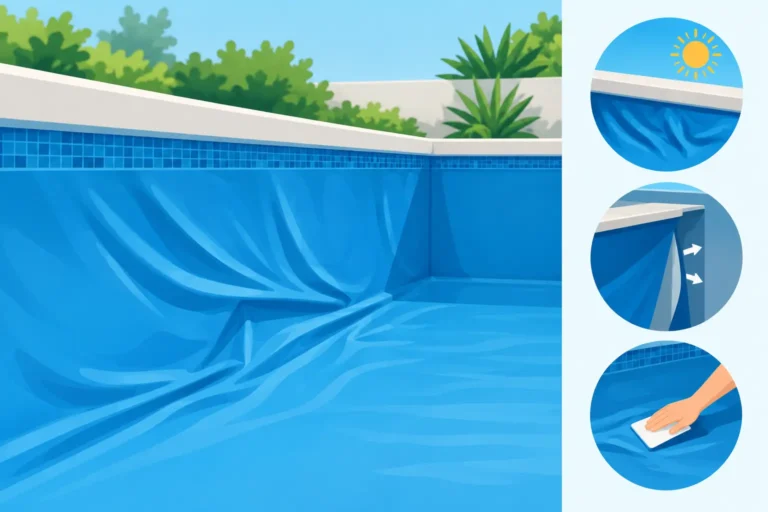
A wrinkle across the shallow end may look like a cosmetic nuisance, but pool liner wrinkles can also be an early warning that the liner has shifted, water is getting behind it, or the pool is losing water. For Georgia pool owners, acting early matters. A liner that continues to move can wear through at the crease, become difficult to clean, and eventually require a more extensive repair or replacement.
Vinyl liners are designed to sit smooth against the pool floor and walls. When they no longer do, the goal is not to simply press the wrinkle flat and hope it stays there. The right repair starts with identifying why the liner moved in the first place.
Why Pool Liner Wrinkles Form
Most wrinkles form because the relationship between the liner, the water inside the pool, and the surface beneath the liner has changed. Sometimes the cause is straightforward. In other cases, especially when water loss is involved, it takes targeted testing to locate the real problem.
Water behind the liner
Water can collect behind a vinyl liner when groundwater rises after heavy rain, when drainage around the pool is poor, or when a leak allows pool water to migrate beneath the liner. That water can separate the liner from the pool floor or wall and create soft areas, bubbles, and wrinkles.
This is a concern because trapped water does not always go away on its own. As swimmers walk across a wrinkled floor, the liner rubs against the underlying surface. Over time, that friction can weaken the vinyl and create a tear at the fold.
A leak in the liner, plumbing, or pool structure
A small puncture, split seam, damaged fitting, or failed gasket can allow water to escape. Not every leak directly causes wrinkles, but ongoing water loss can change pressure around and beneath the liner. If the water level is dropping and new wrinkles are appearing, those symptoms should be evaluated together.
The leak may also be outside the liner itself. A return line, skimmer connection, main drain line, or other underground plumbing component can fail without leaving an obvious wet spot in the yard. That is why a visual inspection alone is not always enough.
Low water level or improper draining
The water in a vinyl pool does more than provide a place to swim. It helps hold the liner in position. Letting the level fall too low, whether from evaporation, a leak, or intentional draining, can allow the liner to relax and shift.
Draining a vinyl liner pool without a repair plan is particularly risky. Groundwater pressure can lift the liner, and an older liner may shrink once it is exposed and cannot be stretched back into place. If you suspect a leak, do not drain the pool as a first response unless a qualified technician has advised it.
Installation and liner fit issues
Wrinkles can appear shortly after a new liner installation if the liner was not positioned correctly before filling, if vacuum pressure was lost during installation, or if the liner was not the correct fit for the pool. A wrinkle that develops immediately or within the first few weeks deserves prompt attention. It is usually easier to correct before the liner has settled and the crease becomes permanent.
Age, heat, and chemical damage
Vinyl becomes less flexible as it ages. Georgia heat, prolonged sun exposure, and unbalanced water chemistry can accelerate that process. An aging liner may shrink, pull away from fittings, or lose its ability to lie flat. In those cases, trying to force wrinkles out can create more damage than it solves.
When Pool Liner Wrinkles Need Professional Attention
A single light crease near a step may not always mean an emergency, especially if it has been there for years and has not changed. New wrinkles, expanding wrinkles, soft spots, or wrinkles accompanied by water loss are different. Those conditions call for a closer inspection.
Watch for a water level that falls faster than normal evaporation, air entering the pump system, wet ground around the pool, discolored areas beneath the liner, loose liner bead along the coping, or a crease that feels sharp underfoot. Also pay attention to changes after a storm, after opening the pool, or after equipment work. Timing often provides useful clues about the cause.
Coastal Pool Repairs and Leak Detection approaches these situations as a diagnostic issue first. A technician can inspect the liner, seams, fittings, skimmer, returns, and equipment while checking whether the pool is actually losing water. When needed, pressure testing can isolate plumbing lines, dye testing can help identify small leaks at fittings or liner damage, and acoustic listening can help locate concealed underground plumbing failures.
That process prevents a common mistake: repairing the visible wrinkle while leaving the source of water movement unresolved.
Can You Smooth Out a Wrinkle Yourself?
Minor wrinkles sometimes can be reduced while the pool is full and the liner remains flexible. Homeowners may gently work from the center of the wrinkle toward the nearest wall using bare feet or a soft pool brush. Avoid sharp tools, abrasive pads, or aggressive pulling. A vinyl liner can puncture more easily than it appears, especially around a stressed fold.
However, do not attempt to move wrinkles if the liner feels loose, if there is water behind it, or if the water level is falling. Do not pull the liner bead out of the track to gain slack. Those approaches can turn a manageable repair into a liner reset or replacement.
It also depends on the liner’s age. A newer, pliable liner may respond to careful adjustment. A brittle or shrunken liner may tear when manipulated. When there is any doubt, an inspection is the safer and more cost-effective step.
How Professionals Repair Wrinkled Vinyl Liners
The repair method depends on what caused the liner to shift and whether the vinyl has been damaged. If a small liner puncture or seam issue is confirmed, a proper underwater patch or targeted liner repair may stop the water loss. The repair area must be cleaned, prepared, and matched with the correct patch material and adhesive for a reliable result.
If water is trapped behind the liner, the source of that water must be addressed before the liner is reset. That may involve improving drainage, repairing a plumbing leak, sealing a failed fitting, or correcting a liner leak. Once the area is dry and stable, a technician can assess whether the liner can be repositioned without damage.
For a liner that has shrunk, hardened, faded severely, or developed multiple weak areas, replacement may be the practical choice. Replacement costs more upfront, but repeated patches on an aging liner can become a poor value. A clear assessment should explain the condition of the liner, the repair options, and the likely service life of each option before work begins.
Preventing New Wrinkles After Repair
A repaired liner needs stable water levels, balanced chemistry, and attention to drainage around the pool. Keep the water at the recommended operating level, particularly during hot weather or while away from home. If you notice unexplained loss, do not keep adding water indefinitely. Track the level and schedule an inspection before the issue affects the liner or surrounding pool components.
Maintain balanced sanitizer, pH, and alkalinity levels to help preserve vinyl flexibility. After periods of heavy rain, check the pool area for standing water and watch for any change in the liner’s appearance. If your pool has a history of groundwater concerns, mention that during service so the repair plan accounts for conditions below the liner as well as inside the pool.
Common Questions About Pool Liner Wrinkles
Are pool liner wrinkles always caused by a leak?
No. Wrinkles can result from installation issues, low water, age, or groundwater pressure. Still, a new wrinkle combined with noticeable water loss should be treated as a possible leak until testing shows otherwise.
Will wrinkles damage a vinyl liner?
They can. Foot traffic, vacuum heads, and debris can rub against the raised fold and wear the vinyl over time. Deep wrinkles also collect dirt and make cleaning more difficult.
Should I drain the pool to remove liner wrinkles?
Usually, no. Draining can make the liner shift further, shrink, float, or pull away from the coping. The decision should be based on the liner condition and the specific repair needed.
A smooth liner is easier on bare feet, easier to clean, and more likely to deliver the service life you expect. If a wrinkle is new, growing, or paired with water loss, getting the cause identified now can protect the liner before a small movement becomes a larger pool repair.
