

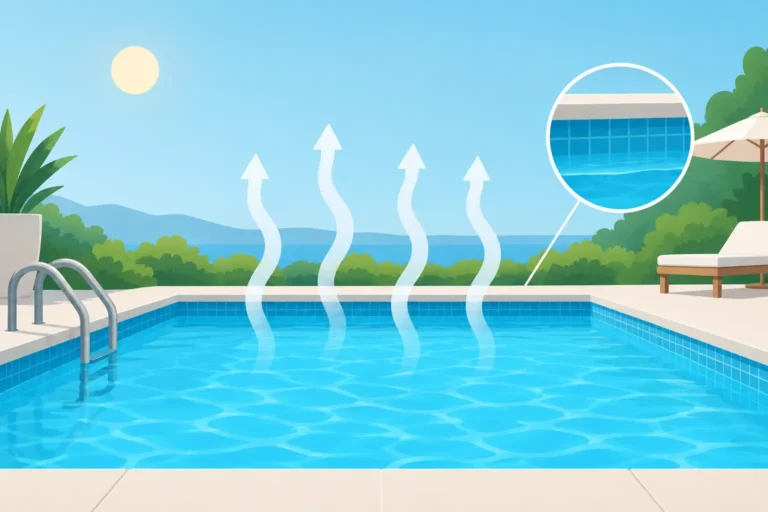
A pool that needs another inch or two of water can make any homeowner wonder: is pool water evaporation really the cause, or is there a leak somewhere out of sight? In Georgia, heat, sun, wind, and long pump run times can all increase normal water loss. But a pool should not require constant refilling to stay at a usable level.
The difference matters. Evaporation is expected and seasonal. A leak can waste thousands of gallons, affect water chemistry, strain equipment, erode soil around the pool, and turn a manageable repair into a larger problem. The goal is not to guess based on the weather. It is to measure the loss, rule out normal evaporation, and identify the source when the numbers point to a leak.
Is Pool Water Evaporation Normal in Georgia?
Yes. Every outdoor pool loses some water to evaporation, especially during a hot Georgia summer. Water molecules at the surface turn into vapor and move into the surrounding air. The process speeds up when the water is warm, the air is dry, wind crosses the surface, or the pool is uncovered for long periods.
For many residential pools, a loss of roughly one-quarter to one-half inch per day can be within a normal range during hot, sunny, windy weather. That range is not a promise. A shaded pool with a cover may lose very little, while a heated pool exposed to afternoon wind may lose more. Splash-out from children, pets, swimmers, and water features also has to be considered.
What raises concern is consistent loss beyond that range, water disappearing at the same rate during mild weather, or a noticeable drop that continues even when the pool is not being used. If you are adding water every few days, seeing more than an inch or two of loss per week, or struggling to keep the skimmer operating properly, it is time to investigate.
Why the water level matters
A low water level is more than a cosmetic issue. When it falls below the skimmer opening, the pump can draw air rather than water. That can reduce circulation, interfere with filtration, and potentially damage equipment that relies on water flow for cooling and lubrication.
Repeated refilling also dilutes the chemicals you have already balanced. Homeowners often respond by adding more sanitizer, salt, stabilizer, or other products without realizing the source of the imbalance is ongoing water loss. Finding the reason for the loss protects both the pool and the money spent maintaining it.
Evaporation or Leak? Start With a Bucket Test
The bucket test is a useful first step because it compares the pool’s water loss with water exposed to the same conditions. It cannot locate a leak, but it can tell you whether the pool is losing more water than evaporation alone would explain.
Fill a five-gallon bucket with pool water and place it on the first or second pool step, where the water outside the bucket matches the water level inside. Mark the water level inside the bucket and the pool water level on the outside of the bucket. Turn off automatic fill devices if your pool has one, and avoid swimming, backwashing, or running water features during the test.
After 24 hours, compare the two marks. If the pool and bucket drop by about the same amount, evaporation is the likely explanation. If the pool level drops significantly more than the water in the bucket, a leak is likely present.
For a clearer result, repeat the test with the pump running and then with the pump off. A greater loss while the system runs can point toward a pressure-side plumbing leak, a return fitting issue, or equipment trouble. Greater loss with the system off may indicate a structural leak, skimmer issue, suction-side plumbing problem, liner damage, or a leak around a fitting.
Treat the bucket test as screening, not a final diagnosis. Rain, an unnoticed auto-fill system, a sudden temperature change, or active water features can distort the result. It tells you whether to bring in diagnostic testing, not where to start digging.
Signs Water Loss Is More Than Evaporation
The water level itself is the most obvious clue, but hidden leaks often leave additional evidence. Pay attention to wet or unusually soft soil near the pool, pump pad, plumbing routes, or retaining walls. A persistent damp area may indicate escaping water underground, although drainage and irrigation issues can look similar.
You may also notice air bubbles returning through the pool jets, trouble priming the pump, reduced circulation, or a filter pressure change that does not fit your normal operating pattern. These symptoms can occur when a plumbing line, valve, fitting, or pump component is allowing air into the system or water out of it.
For concrete and gunite pools, cracks, loose tile, deteriorated grout, separation around fittings, and skimmer cracks deserve attention. Not every surface crack leaks, but it should be evaluated if the pool is losing water. Vinyl liner pools may show tears, punctures, seam separation, wrinkles caused by groundwater conditions, or a water level that stops dropping at a particular point. Fiberglass pools can develop issues around fittings, plumbing connections, lights, or areas where the shell and surrounding structure have shifted.
A useful clue is where the water level stops. If it consistently stabilizes at the bottom of a skimmer, light, return fitting, or step, that location may be connected to the leak. Do not assume the leak is exactly at that height, though. Plumbing and shell conditions can be more complicated than the stopping point suggests.
Why Guessing Can Lead to the Wrong Repair
Adding leak sealer, repeatedly refilling the pool, or replacing a visible gasket without testing may feel like the fastest response. Sometimes a simple gasket is the problem. More often, guessing delays the repair and makes it harder to understand what actually changed.
Pool water can escape through the shell, liner, skimmer, light niche, return fittings, main drain, underground plumbing, pump, filter, valves, or attached features. Several of those failures can create nearly identical symptoms. A wet spot does not automatically mean a broken pipe, and water loss with the pump running does not always mean the equipment pad is at fault.
A proper diagnosis separates the pool into systems and tests each one. That reduces unnecessary excavation, avoids replacing parts that are still sound, and gives the homeowner a clear basis for approving the repair.
How Professional Leak Detection Finds the Source
When the bucket test points to a leak, professional testing provides answers that observation alone cannot. At Coastal Pool Repairs and Leak Detection, technicians inspect the pool structure, liner or shell, fittings, equipment, and accessible plumbing before recommending repairs.
Pressure testing is commonly used to evaluate plumbing lines. A line is isolated and monitored for pressure loss, which helps determine whether it is holding or leaking. Acoustic listening equipment can then help locate the sound of water escaping underground, limiting the need for broad, unnecessary digging.
Dye testing is useful around suspected cracks, fittings, skimmers, lights, and liner details. With circulation controlled, a technician watches whether dye is drawn toward a specific opening. Thermal imaging may also help identify temperature differences associated with moisture below the surface or around concealed components.
No single tool is right for every pool. A vinyl liner tear may require close visual and dye inspection, while a suspected underground return-line leak may call for pressure testing and acoustic equipment. That is why the pool type, water-loss pattern, equipment condition, and test results all matter before a repair estimate is prepared.
What You Can Do While Waiting for Diagnosis
Keep the water level high enough for safe skimmer operation, but do not continually overfill the pool. Mark the waterline daily with a piece of tape or grease pencil so you have a record of the rate of loss. Note whether the pump was on, whether anyone used the pool, and whether a storm or strong wind occurred.
Avoid running waterfalls, spillovers, deck jets, and other features until you know what is happening. They increase evaporation and can hide the true loss rate. Do not shut the system down for an extended period without guidance if doing so could affect water quality or equipment protection.
If the water level is falling quickly, keep it from dropping below the skimmer and contact a qualified pool leak specialist promptly. Fast loss can create equipment concerns and may indicate a problem that will not improve by waiting.
A pool should be a place to cool off, not a weekly mystery involving a garden hose. Measure the loss, use the bucket test as a starting point, and get a documented diagnosis when the results suggest more than normal evaporation. Clear testing gives you a practical repair plan and the confidence to put water back where it belongs: in your pool.
