

A pool that needs the hose every few days is not just frustrating. Pool leaks can quietly wash out soil, strain equipment, damage decking, and turn routine chemical balancing into a constant expense. The sooner the real source is identified, the more options you typically have for a focused repair instead of a larger restoration.
Georgia heat and evaporation do cause normal water loss, especially during a dry, windy stretch. But a noticeable drop in water level, wet areas near the pool, air entering the pump, or a chemical demand that suddenly changes deserves a closer look. A trained leak specialist can separate a true structural or plumbing issue from ordinary evaporation and maintenance conditions.
Signs Your Pool May Have a Leak
Most homeowners first notice that the water level is lower than usual. The important question is how quickly it is dropping and whether that loss changes when the pool equipment is running. A pool losing more than roughly one-quarter inch per day may have a problem, although weather, splashing, bather load, and water features can affect that number.
Other warning signs are often more telling. You may see damp soil around plumbing lines or equipment, loose or settling deck material, cracks near skimmers and returns, or a persistent wet spot in the yard. A vinyl liner can develop wrinkles, tears, or areas where the liner has pulled away. In concrete pools, tile movement, cracked plaster, and separation around fittings may allow water to escape.
Equipment behavior also matters. If the pump loses prime, blows bubbles into the pool, or requires frequent water additions to keep the skimmer operating properly, the issue may involve the suction side plumbing, a fitting, or the pool water level itself. Not every equipment issue is a leak, but these symptoms help narrow the inspection.
Try a simple bucket test first
A bucket test can help you compare evaporation with actual water loss. Fill a bucket with pool water and set it on a pool step so the water inside the bucket is at about the same level as the water outside. Mark both levels, then leave the pool undisturbed for 24 hours with the pump off.
If the pool water outside the bucket drops more than the water inside, you likely have water loss beyond evaporation. Repeat the test with the pump running if possible. A greater loss while the system is operating can point toward a plumbing leak, return-side issue, or equipment problem. The test cannot locate the leak, but it gives useful information before professional testing begins.
Where Pool Leaks Usually Occur
Leaks can develop in the pool shell, liner, plumbing, fittings, or equipment pad. The location matters because the repair approach, access requirements, and cost can be very different.
A concrete or gunite pool may leak through cracks in the shell, deteriorated plaster, damaged expansion joints, or failed seals around lights, drains, skimmers, and return fittings. Small surface cracks are not always the source of water loss, while a crack that reaches the shell can be significant. Dye testing around suspect areas helps show whether water is being drawn into a specific opening.
Vinyl liner pools often lose water through punctures, seam separations, loose faceplates, steps, or worn gaskets around skimmers and returns. A liner leak may be hard to spot because a tiny tear can be hidden in a wrinkle or beneath a ladder. Repair is sometimes straightforward when the liner is otherwise in good condition. If the liner is brittle, faded, shrinking, or damaged in several places, replacement may be a more practical long-term decision.
Fiberglass pools can develop leaks at plumbing penetrations, fittings, lights, skimmers, or areas where movement has stressed the surface. The shell itself is durable, but repairs still require an inspection that accounts for the pool’s construction and condition.
Underground plumbing is another common source. Pool lines can crack from age, ground movement, freezing conditions, shifting soil, or installation issues. A return line may leak only while the pump is running. A suction line can pull air into the system without always creating an obvious wet area above ground. That is why visual inspection alone is rarely enough.
How Professional Pool Leak Detection Works
Finding a leak should be a methodical process, not a guess based on the nearest crack. Coastal Pool Repairs and Leak Detection begins by examining the pool structure, fittings, equipment, and surrounding area, then uses targeted testing based on the symptoms and pool type.
Pressure testing for plumbing lines
Pressure testing isolates individual plumbing lines and checks whether they hold pressure. A line that drops pressure may have a break, separation, or failed connection. This step helps distinguish a plumbing problem from a shell or liner issue and prevents unnecessary digging.
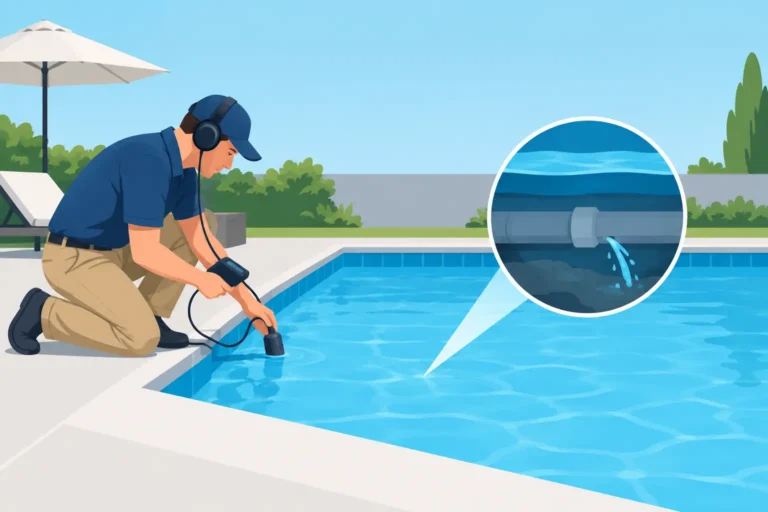
Once a suspect line is identified, acoustic listening equipment can help locate the sound of water escaping underground. The goal is to narrow the repair area as much as possible before excavation begins. Exact conditions vary, since soil type, pipe depth, and the size of the leak affect how clearly it can be detected.
Dye testing, visual inspection, and thermal imaging
Dye testing uses a small amount of colored dye near a suspected opening. If the dye is drawn into a crack, fitting, or gap, that movement provides evidence of a leak path. It is especially useful around lights, skimmers, main drains, tile lines, and visible shell cracks.
Detailed visual inspection remains essential. Technicians look for damaged seals, compromised fittings, liner defects, worn caulking, and evidence of water movement around the pool. Thermal imaging may also help identify temperature differences associated with moisture or underground water movement in certain situations. It is one diagnostic tool, not a replacement for pressure testing and hands-on inspection.
The best testing plan depends on the pool. A vinyl liner pool with a stable water loss rate requires a different process than a concrete pool that loses water only when the pump runs. Clear findings and an explanation of what the tests show allow you to make a repair decision with confidence.
Why Waiting Can Make a Leak More Expensive
Water loss itself has a cost, but the secondary damage can be worse. Escaping water may erode soil beneath decking, create voids near the pool shell, contribute to settling, or affect nearby landscaping. A leak can also leave the water level too low for proper skimmer operation, which can lead to pump problems.
Chemical use rises when fresh water is constantly added. If water drops below the tile line or skimmer, surface staining and operational problems can follow. In a vinyl pool, allowing the water level to fall too far can place stress on the liner and create additional repair needs.
There is a balance, however. A small, confirmed fitting leak may be scheduled around weather and family use if the pool can be operated safely. A rapidly dropping water level, wet ground near electrical equipment, a failing pump prime, or visible deck movement should be addressed promptly. If you are unsure whether the pool should remain running, ask a qualified technician before continuing normal operation.
What Affects Pool Leak Repair Cost
No responsible contractor can quote every leak repair from a description alone. The price depends on whether the issue is in the shell, liner, equipment, or underground plumbing; how accessible the area is; what testing is needed; and whether related materials need replacement.
For example, repairing a visible liner puncture is generally less involved than locating and excavating a broken pipe beneath concrete decking. A failed skimmer may require removal and rebuilding work around the pool wall. A crack repair may need surface preparation, structural assessment, and finish matching. The most useful estimate explains the diagnosed issue, recommended repair, scope of work, and any conditions that could change the plan once the area is opened.
Documentation matters here. Photos, pressure-test results, and a clear explanation of findings help homeowners understand why a repair is recommended and what work is included. Ask about workmanship warranties and whether the technician can complete the repair after detection instead of sending you to a separate contractor.
Protect Your Pool While You Schedule Service
Until the leak is evaluated, monitor the water level and do not allow it to fall below the skimmer opening. Avoid repeatedly filling the pool without tracking the loss, since that can make patterns harder to recognize and increase chemical costs. If you suspect a plumbing leak, note whether the water level changes differently with the pump on versus off.
Keep a short record of when the problem began, recent weather, equipment changes, and any visible wet spots or cracks. Photos can be helpful, especially if conditions change before the appointment. Do not inject sealers or patch materials into plumbing lines without a diagnosis. They can create restrictions, complicate testing, and fail to address the actual source.
A leak does not have to become a major pool project. Acting while the symptoms are still clear gives your technician better diagnostic information and gives you more control over the repair decision. If your pool is losing water faster than normal, a professional inspection is the practical next step toward getting it back to dependable use.
