

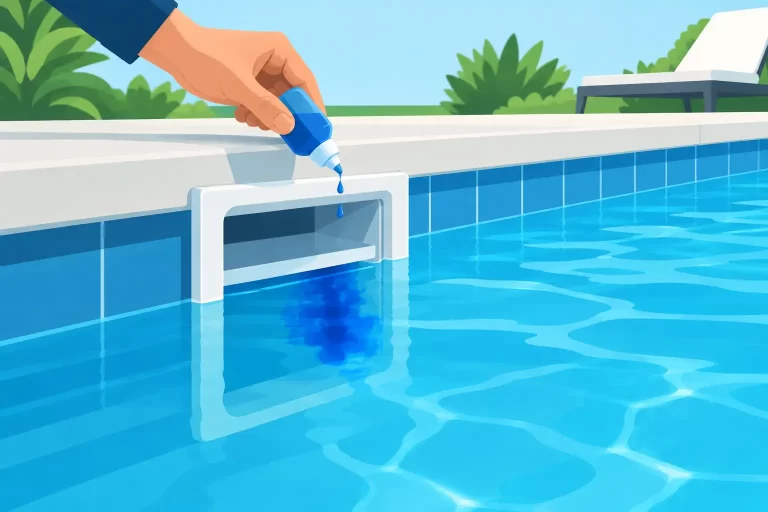
A pool dye test skimmer inspection can reveal why a pool is losing water when the leak is not obvious from the deck or equipment pad. Skimmers are one of the most common problem areas because they connect the pool shell, plumbing, faceplate, and surrounding concrete in one location. A small separation at any of those points can let water escape steadily, often without creating a visible puddle.
For Georgia pool owners, identifying the exact source matters before repair work begins. Replacing a skimmer, cutting concrete, or patching a crack without confirming the failure can add cost without stopping the water loss. Dye testing is a focused diagnostic method that helps determine whether the skimmer itself is pulling water through a gap.
What a Pool Dye Test Skimmer Inspection Shows
A dye test uses a small amount of concentrated, highly visible dye near a suspected leak while the pool water is still. If water is being drawn through a crack, failed seal, or opening, the dye moves toward that area instead of dispersing normally into the pool.
At the skimmer, a technician may test around the faceplate, the throat where the skimmer meets the pool wall, visible cracks in the plastic body, pipe connections, and the joint between the skimmer and pool shell. The movement of dye can provide useful evidence of a structural leak, especially when the pool is filled to a level that keeps the suspected area underwater.
This is not a guess-and-pour process. Water circulation must be off, and the water needs time to settle. Even a light current from return jets, wind, a running pump, or a swimmer can move dye and create misleading results. Skilled testing also means using the right amount of dye and watching the area closely rather than assuming any movement proves a leak.
Why Skimmers Develop Leaks
A skimmer must withstand changing water levels, chemical exposure, ground movement, heat, and the weight of surrounding concrete. Over time, those conditions can stress connections that once appeared solid.
In concrete pools, movement or settling can create a separation between the skimmer body and the pool shell. The plastic skimmer may also crack near the throat or plumbing port. In vinyl liner pools, a loose, warped, or deteriorated faceplate gasket can allow water behind the liner. Fiberglass pools can experience issues at fittings, plumbing connections, or areas where the skimmer assembly has shifted.
Some skimmer concerns are seasonal. During colder weather, water left in plumbing or the skimmer body can freeze and expand. During hot Georgia summers, repeated expansion and contraction may expose a weak joint. A pool that loses water only when the pump runs may point more strongly to a suction-side plumbing issue, while water loss at all times can indicate a structural opening at the skimmer or shell.
When Dye Testing Is the Right Next Step
A dye test is most useful when there is a specific reason to suspect the skimmer. Common signs include water dropping to the bottom of the skimmer opening and then slowing down, a visible crack around the skimmer, staining or soft soil near the pool wall, or a skimmer that appears to pull air into the system.
However, a dye test alone cannot rule out every problem. If the water level continues falling below the skimmer and keeps dropping, the leak may be lower in the pool, at a light, through a liner tear, or in another plumbing line. Likewise, dye may not reveal a buried pipe leak that is several feet away from the skimmer body.
That is why a complete leak inspection typically considers more than one test. Visual inspection, water-level monitoring, pressure testing, acoustic listening, and equipment checks can each answer a different question. The goal is to identify the failure accurately, not to force every water-loss problem into the same diagnosis.
How Professionals Test a Suspected Skimmer Leak
Before introducing dye, the technician checks the pool’s water level, turns off circulation, and lets the water become still. The skimmer basket, weir, faceplate, screws, and visible interior surfaces are inspected for cracks, loose components, gaps, or signs of deterioration.
Dye is then placed near suspected openings with a small applicator. Rather than flooding the skimmer with color, the technician uses controlled amounts close to the joint or crack being evaluated. If the dye stream is pulled directly into a specific point, it can confirm water movement through that opening.
The suction line may also need separate testing. A skimmer pipe can leak underground while the visible skimmer body remains intact. In that situation, pressure testing helps determine whether the plumbing line holds pressure as it should. Acoustic equipment may be used to listen for the sound of escaping water underground, depending on the pool layout and conditions.
Testing both the skimmer structure and its plumbing connection prevents an incomplete repair. A sealed faceplate will not correct a cracked suction line, and a repaired pipe will not stop water loss through a separation in the pool wall.
What Happens After the Dye Test
The repair depends on the confirmed source, the pool type, and the condition of the surrounding materials. A minor faceplate or gasket issue on a vinyl liner pool may be repaired without major construction work. A crack in the skimmer body may require a specialized repair or replacement. If the skimmer has separated from the concrete shell, repair may involve addressing the joint and, in some cases, accessing the area from the deck.
Underground plumbing repairs can require targeted excavation. The best approach is to locate the failure as precisely as possible first, which helps limit unnecessary concrete removal and landscape disruption. If the skimmer is old, brittle, or damaged in multiple places, replacement may be more dependable than repeatedly patching a deteriorating component.
A clear estimate should explain what was found, what repair is recommended, and what factors could affect the final scope. Homeowners should also ask whether the repair includes a warranty and whether the technician will retest the area after work is completed.
Can You Perform a Skimmer Dye Test Yourself?
Homeowners can sometimes use dye as an initial check, particularly when there is an obvious visible crack or a suspect gap around a faceplate. Turn the pump off, wait for calm water, and avoid testing when wind or active water movement is present. Do not push tools into the skimmer plumbing or loosen faceplate screws under water unless you understand how your pool’s liner, fittings, and seals are assembled.
The limitation is interpretation. Dye that drifts slightly does not always mean there is a leak. Natural water movement, temperature differences, and a nearby suction current can affect what you see. A small leak may also be difficult to detect visually, while a buried plumbing failure will not be confirmed with surface dye testing alone.
If the pool is losing more water than normal evaporation, the water level is falling quickly, or the pump is drawing air, professional testing is usually the more cost-effective choice. Early diagnosis can prevent damage to the pump, avoid wasted chemicals and water, and reduce the chance of a minor leak becoming a larger repair.
FAQ: Pool Dye Test Skimmer Questions
How much water loss is normal?
Evaporation varies with heat, humidity, wind, pool exposure, and use. A sudden increase in water loss, daily drops that require frequent refilling, or a level that repeatedly stops near the skimmer are reasons to schedule an inspection.
Will a skimmer leak cause air in the pump?
It can. When the water level is low or the skimmer suction line has a leak, air may enter the system and cause bubbles in the pump basket or return lines. Air leaks can also come from equipment-side fittings, so the entire circulation system should be checked.
Does a dye test damage pool water?
No. Diagnostic dye is used in very small amounts and is intended to make water movement visible. It does not replace chemical balancing or repair work.
A skimmer leak does not have to turn into a major disruption. If your pool is losing water, document where the level stops, avoid running the pump when it is drawing air, and arrange testing before the problem spreads. Coastal Pool Repairs and Leak Detection can identify the source and explain the repair path clearly, so you can make a confident decision about getting your pool back in working condition.
