

A small split near a vinyl pool’s floor seam can waste hundreds of gallons before it becomes obvious. Vinyl pool liner tear repair is often straightforward when the damage is found early, but a patch applied to the wrong area, over a hidden leak, or on a liner nearing the end of its life can turn a manageable repair into a larger problem.
For Georgia pool owners, the right response depends on the tear’s size, location, cause, and whether it is actually responsible for the water loss. A qualified inspection helps separate a simple liner patch from a plumbing leak, failing fitting, damaged seam, or liner replacement decision.
First, Confirm the Liner Tear Is Causing Water Loss
A visible tear deserves attention, but it should not automatically be blamed for every drop in the water level. Pools can lose water through skimmers, return fittings, underground plumbing, light niches, equipment, and evaporation. More than one issue can exist at the same time, especially in an older pool.
Start by observing where the water stops dropping. If the water level consistently settles at the height of a return, skimmer opening, stair fitting, or light, that detail can point to the affected area. If the pool loses water only while the pump is running, the concern may be pressure-side plumbing or equipment rather than the liner.
A dye test can help confirm whether water is being drawn through a suspected tear. With the pump off and the water still, a technician places dye near the damaged area. Dye moving into the opening is a strong indication that the tear is active. When the source is less clear, pressure testing, acoustic listening, and detailed fitting inspections can locate concealed leaks before repair work begins.
This diagnostic step matters. Patching a visible nick may protect the liner, but it will not stop water loss from a cracked pipe beneath the deck or a leaking return line.
What Causes Vinyl Liner Tears?
Vinyl is flexible, but it is not indestructible. Most tears develop from a specific event or from gradual liner aging. Pool toys, metal objects, pet claws, sharp vacuum heads, damaged brushes, and rough use around steps can puncture or slice the material. A dropped tool during maintenance can do the same.
Some damage is less dramatic. Vinyl liners lose flexibility as they age, particularly after years of sun exposure, chemical imbalance, or repeated stretching and shrinking. A brittle liner can split along a seam or around a fitting with very little force. Low water levels can also place stress on the liner, while shifting ground or wall movement can create wrinkles and pull at seams.
The cause affects the repair recommendation. An isolated puncture in otherwise healthy vinyl is a good candidate for a professional patch. Multiple tears, seam separation, fading, brittleness, or a liner that no longer fits tightly may indicate that replacement will provide the more dependable long-term result.
Vinyl Pool Liner Tear Repair Options
The right repair method depends on the damage, not just its appearance. A small puncture is different from a long cut at the waterline, and both are different from a failing seam at the floor or wall.
Underwater patches for small punctures and cuts
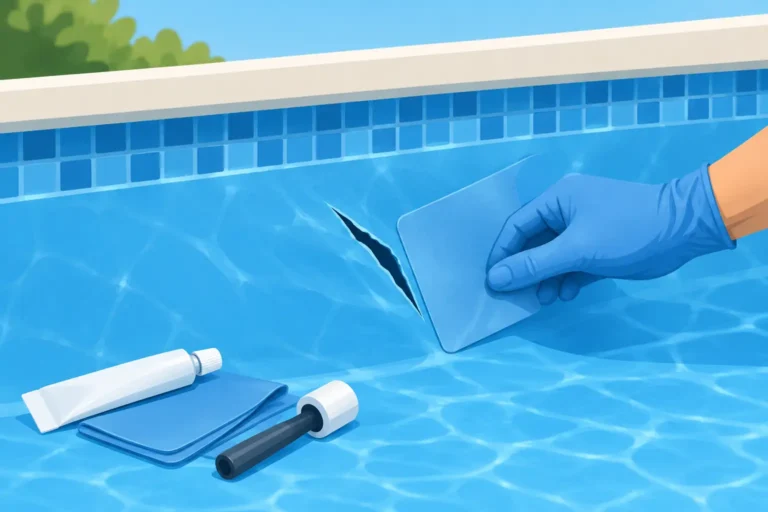
Many minor tears can be repaired without draining the pool. A vinyl patch material and pool-safe adhesive are applied over the damaged area, usually with rounded patch corners to reduce lifting. The patch must extend beyond the tear on every side and bond to a clean, stable liner surface.
Underwater patching is useful because draining a vinyl pool can create its own risks. The liner may shrink, shift, wrinkle, or fail to reset correctly, especially if it is older. Draining is not the default answer for a repairable tear.
That said, a patch is only as good as the surface beneath it. If the vinyl is thin, brittle, heavily wrinkled, or torn near a stressed seam, the repair may be temporary. A technician should explain that trade-off clearly before work begins.
Seam and fitting-area repairs
Tears around steps, skimmers, returns, main drains, and light openings require closer inspection. These areas include gaskets, screws, faceplates, and transitions where leaks can develop even when the liner itself appears intact. A patch may be part of the repair, but the fitting assembly may also need to be resealed, tightened, or replaced.
Seam issues deserve special attention. A small seam separation can sometimes be stabilized, depending on the liner’s condition and location. Widespread seam failure generally signals that the liner has aged beyond a practical repair. Continuing to patch multiple weak points can cost more over time while leaving the pool vulnerable to continued water loss.
When liner replacement is the better call
Replacement is not necessary for every tear, but it becomes reasonable when damage is extensive or the liner is nearing the end of its service life. Signs include several patched areas, recurring leaks, cracking, significant fading, loss of elasticity, large seam failures, or a liner that has pulled away from its track.
A replacement also provides the opportunity to inspect the pool wall, floor, fittings, and underlying surfaces that are normally hidden. If a tear resulted from a sharp protrusion, corrosion, settlement, or wall damage, that underlying cause should be corrected before a new liner is installed.
Why DIY Patches Sometimes Fail
Store-bought patch kits can be useful for a small emergency repair, especially when a tear is easy to access and clearly identified. But DIY repairs commonly fail for reasons that are not obvious from above the waterline.
The patch may be too small, cut with square corners, applied over algae or residue, or placed on liner material that is already weak. An adhesive may not be formulated for underwater use, or the tear may continue beneath the patch. A homeowner can also mistake a crease, stain, or liner wrinkle for the actual opening.
There is also the question of diagnosis. If the pool continues losing water after a patch, the issue may not be patch quality at all. It may be a separate leak in the plumbing, skimmer, return fitting, or equipment pad. Repeatedly adding water and applying larger patches delays the repair and can increase water, chemical, and heating costs.
Protect the Pool While You Arrange Repair
If you find a tear, avoid aggressive brushing, vacuuming directly over the area, or allowing swimmers to pull at loose liner material. Keep sharp objects, weighted toys, and pets away from the damaged section. If water loss is rapid, monitor the level closely and do not let it fall below the skimmer intake or other critical fittings.
Do not drain a vinyl liner pool without professional guidance. A drained liner can shift or shrink, and groundwater pressure can create additional problems beneath the pool. In many cases, a repair can be completed with the pool full of water.
Take a clear photo of the area if possible and note when you first noticed the water loss. Helpful details include whether the pump was running, how quickly the level dropped, and where the water stabilized. Those observations give the repair technician a better starting point.
What a Professional Liner Leak Inspection Looks Like
A professional visit should begin with questions about water-loss patterns and the pool’s age, followed by a careful visual inspection of the liner, seams, steps, fittings, skimmers, and equipment. Depending on the findings, testing may include dye testing around suspected openings, pressure testing plumbing lines, and acoustic methods for locating underground leaks.
The goal is not simply to find something that looks damaged. It is to identify the point or points where water is escaping and recommend the repair that makes financial sense. Homeowners should receive a clear explanation of the findings, the expected repair scope, and whether a patch is likely to be a lasting solution or a short-term measure.
Coastal Pool Repairs and Leak Detection provides technology-led diagnostics and repair options for vinyl liner pools throughout Monroe and surrounding Georgia communities. Skilled. Experienced. Equipped. The focus is on locating the actual cause of water loss, explaining the options, and completing the repair with documented findings and dependable workmanship.
Common Questions About Liner Tear Repairs
Can a vinyl liner tear be repaired underwater?
Yes. Many small punctures and cuts can be patched underwater with materials designed for pool liner repairs. The tear still needs to be evaluated for location, liner condition, and leak activity before deciding whether a patch is appropriate.
How long does a vinyl liner patch last?
A properly applied patch on healthy vinyl can last for years. Its lifespan depends on the liner’s age, water chemistry, the tear location, surface preparation, and whether the damaged area is under ongoing stress.
Will a patch be noticeable?
Usually, yes. A patch may be visible, particularly above the waterline or on a patterned liner. A clean, properly sized patch is generally far less noticeable than continued water loss, wrinkling, or a growing tear.
Does a torn liner always mean replacement?
No. One small tear does not automatically require a new liner. Replacement is more likely when there are multiple failures, extensive seam damage, brittle material, poor fit, or repeated leaks across an aging liner.
A liner tear is worth addressing before it becomes the reason your pool sits unused or your water bill climbs. The most helpful next step is a careful diagnosis, followed by a repair recommendation that matches the condition of the liner and the actual source of the leak.
