

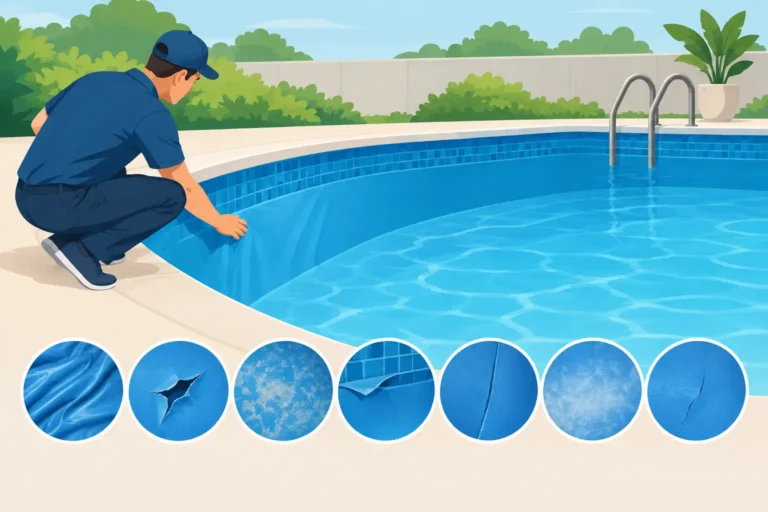
A vinyl liner rarely fails all at once. More often, a homeowner notices the water level dropping a little faster, a small tear near a step, or a wrinkle that was not there last season. The search phrase “when replace pool liner” usually starts with one concern: is this a manageable repair, or is it time to plan for replacement? The answer depends on the liner’s age, condition, fit, and whether the water loss actually comes from the liner at all.
A replacement is a significant investment, so it should be based on evidence rather than guesswork. A trained pool technician can inspect the liner, confirm the source of a leak, and explain whether a repair is likely to last. That gives you a clear repair plan instead of spending money on a liner when a plumbing line, skimmer, fitting, or equipment issue is causing the problem.
When to Replace a Pool Liner Instead of Repairing It
A properly maintained vinyl liner commonly lasts about 8 to 15 years. Georgia sun, changing water chemistry, heavy use, and periods of low water can shorten that range. Age alone does not require replacement, but an older liner has less flexibility and is more likely to tear during a repair or fail in another area soon afterward.
Replacement becomes the practical choice when damage is widespread, the liner no longer fits the pool correctly, or its material has become brittle. A single small puncture in an otherwise flexible liner may be patchable. Several tears, faded and thin vinyl, separation at the bead, or ongoing leaks in an aging liner point toward replacement.
1. The Liner Has Multiple Tears or Repeated Patches
A clean, isolated tear can often be patched, especially if it is away from seams and fittings. The trade-off changes when the liner has several patches, new tears appearing each season, or damage along a seam. Repeated patching can extend service life for a while, but it does not restore the strength of aging vinyl.
Tears around stairs, corners, returns, lights, skimmers, and drains deserve particular attention. These areas experience movement and stress, and a patch may not be a long-term answer if the liner is pulling or deteriorating around the fitting.
2. It Is Fading, Brittle, or Losing Its Stretch
A liner that once felt smooth and flexible can become stiff from age, sun exposure, and chemical imbalance. Fading is often cosmetic at first, but severe discoloration may come with thinning vinyl and loss of elasticity. If the liner cracks, feels brittle, or splits easily when handled, replacement is generally safer than trying to preserve it.
Low pH, high chlorine levels, and improperly balanced water can accelerate liner wear. Maintaining balanced water will not reverse existing damage, but it helps protect a new liner and reduces the chance of premature failure.
3. Wrinkles Keep Returning or the Liner Is Pulling Away
Minor wrinkles may develop after filling a pool, but large or persistent wrinkles are not simply a visual issue. They can trap debris, make vacuuming harder, create wear points, and indicate that the liner has shifted. A liner pulling out of its track, also called the bead, may sometimes be reset if the material still has enough stretch.
If the liner repeatedly pulls away, has shrunk noticeably, or cannot be reset without tearing, replacement is usually the dependable option. Trying to force a shrunken liner back into place can create more damage at the bead or seams.
4. The Water Loss Is Confirmed to Be Through the Liner
Evaporation happens, particularly during hot Georgia weather, but a pool that consistently loses more water than expected needs testing. Do not assume a visible wrinkle or old patch is the source. Water can escape through underground plumbing, a skimmer, a return fitting, a light niche, a cracked shell, or pool equipment.
Liner leaks can be located with careful visual inspection and dye testing. If the water loss is unexplained, technicians may also use pressure testing for plumbing lines and acoustic listening equipment to identify hidden leaks. This process matters because replacing a liner will not correct a leaking return line beneath the deck.
5. Seams Are Separating
Seam separation is one of the clearest signs that a liner is reaching the end of its serviceable life. Seams can fail because of age, material shrinkage, poor water chemistry, or previous stress on the liner. A very small area may be repairable in limited circumstances, but extensive seam failure is not a reliable patch-and-wait situation.
A seam that opens below the waterline can lead to fast water loss. Keep the pool filled enough to avoid additional stress on the liner, avoid draining it without professional guidance, and arrange an inspection promptly.
6. Stains and Discoloration Will Not Respond to Cleaning
Some stains come from metals, organic debris, or algae and can be treated without replacing the liner. Other discoloration is permanent fading or chemical damage within the vinyl itself. If the liner is structurally sound, staining alone may not justify replacement.
However, replacement may make sense when permanent staining is paired with brittle vinyl, thinning areas, wrinkles, or an outdated liner that is already near the end of its life. The decision is not only about appearance. It is about whether the liner can continue to hold water reliably.
7. You Can See the Pool Wall or Floor Beneath the Vinyl
Vinyl that appears unusually thin, has worn spots, or shows the pattern of the wall or floor underneath is nearing failure. These areas can tear with normal use, vacuuming, or a shift in water pressure. Once the material is visibly compromised, a patch may only delay a larger problem.
What to Check Before Scheduling a Liner Replacement
Before committing to a new liner, look at the complete condition of the pool. A replacement project is a good time to inspect wall panels, the pool floor, step areas, gaskets, faceplates, skimmer condition, return fittings, lights, and plumbing connections. Addressing concealed issues before the new liner goes in helps prevent avoidable water loss afterward.
Also consider timing. Liner replacement requires suitable weather, careful measurements, surface preparation, and a controlled installation process. Scheduling before the busiest part of swim season can reduce the disruption to your family’s pool use. If the liner is actively leaking, acting early may also prevent water from getting behind the liner, which can affect the floor base or cause more wrinkles.
Can You Keep Using a Pool With a Damaged Liner?
It depends on the damage and the rate of water loss. A tiny, stable patch above the waterline may not create an immediate emergency. A tear below the waterline, a separated seam, or a pool losing water quickly should be evaluated soon. Letting the water fall too low can expose the liner to heat, increase the risk of shrinkage, and allow the pump to run without adequate water.
Do not drain a vinyl liner pool to inspect a suspected leak unless a qualified professional directs you to do so. The water helps hold the liner in position. Draining without a plan can cause the liner to shift, wrinkle, or pull away from the track, turning a repairable concern into a replacement project.
A Clear Diagnosis Protects Your Replacement Budget
For homeowners in Monroe and throughout the Atlanta-area service network, the most useful first step is confirming where the water is going. Coastal Pool Repairs and Leak Detection evaluates liners, fittings, plumbing, shells, and equipment using appropriate diagnostic methods before recommending a repair scope. You should receive a clear explanation of the findings and an estimate that distinguishes a targeted repair from a full liner replacement.
If your liner is aging but still holding water, there may be time to plan the work around your schedule. If it is losing water, pulling away from the wall, or showing several signs of deterioration, do not wait for the damage to spread. A focused inspection can tell you what is repairable now and what will give your pool the most dependable next season.
