

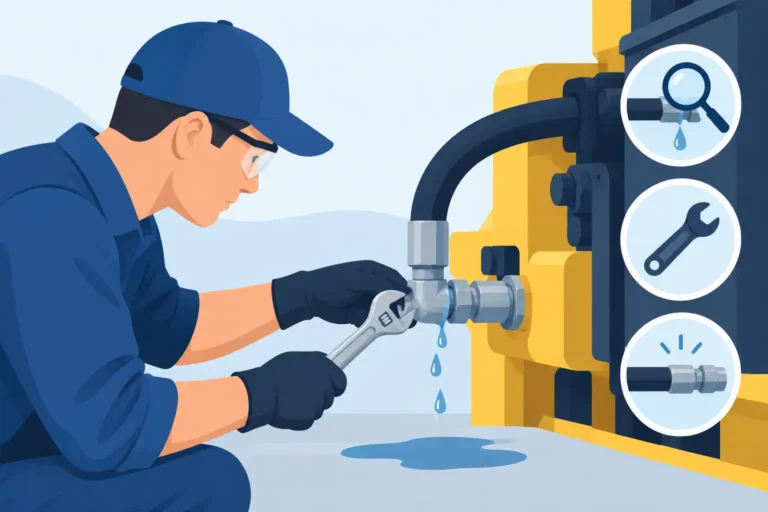
A pool that loses water only while the pump is running often points to one place: the return-side plumbing. Return line leaks can be hidden underground, behind a pool wall, or near equipment, so the absence of a wet spot does not mean the plumbing is sound. Finding the exact failure before digging is what protects your yard, deck, and repair budget.
What Are Return Line Leaks?
Return lines carry filtered water from the pump and filter back to the pool through the return fittings. They operate under pressure whenever the circulation system is on. A crack in a pipe, a failed fitting, a loose union, or a compromised connection can allow water to escape into the ground instead of returning to the pool.
This is different from a suction-side leak, which occurs in plumbing between the skimmer or main drain and the pump. Suction leaks often draw air into the system and may cause bubbles at the returns, a low pump basket water level, or trouble holding prime. A return-side leak usually pushes water out while the equipment is operating. The pool may lose water faster during normal filtration hours and slow down noticeably when the pump is off.
The location matters. A leak at a visible return fitting may be a straightforward repair. A leak beneath concrete decking, landscaping, or a pool shell calls for a more targeted diagnostic process and a repair plan that limits unnecessary disturbance.
Signs Your Pool May Have a Return Line Leak
Evaporation is real, particularly during Georgia heat, wind, and periods of heavy pool use. Still, evaporation does not usually create a sharp difference between water loss with the pump on and water loss with the pump off. That comparison is one of the most useful clues homeowners can observe.
Watch for a falling water level that becomes more pronounced during the filter cycle. You may also see soft or unusually wet ground near plumbing runs, settling pavers, water collecting around the equipment pad, or a persistently low pool level without an obvious shell or liner issue. In some cases, the return jets feel weaker because some of the water is escaping before it reaches the pool.
Higher water bills, repeated chemical adjustments, and air entering the system can also accompany plumbing trouble, although those symptoms are not exclusive to return line leaks. A failing multiport valve, filter problem, overflowing autofill, loose equipment fitting, or leak at the spa line can produce similar concerns. That is why a diagnosis should test the system rather than rely on symptoms alone.
A Simple Pump-On, Pump-Off Check
Mark the water level at the tile line or skimmer with the pump off, then measure the loss over 24 hours. Repeat the process over another 24-hour period with the pump running under its normal schedule. Keep splash-out and rain out of the comparison as much as possible.
If water loss is substantially greater with the pump running, pressure-side plumbing becomes more likely. This check does not identify the exact pipe or repair location, but it gives a technician useful direction before formal testing begins. Do not run a pump long enough for the water level to fall below the skimmer opening. Running dry can damage the pump and create a second repair issue.
How Professionals Locate a Return Line Leak
Accurate testing starts with a complete inspection of accessible equipment. Valves, unions, pump fittings, filter connections, heaters, chlorinators, and visible plumbing are checked first. A small drip at the pad can look minor but still account for meaningful water loss over time.
When the equipment area appears sound, technicians isolate individual plumbing lines and conduct pressure testing. The return line is sealed and pressurized with appropriate equipment, then monitored for pressure loss. A line that will not hold pressure has a failure somewhere in that isolated section. Separating the returns, cleaner line, spa lines, water features, and other plumbing circuits prevents guesswork.
Pressure testing confirms whether a line is compromised, but it does not always reveal the precise break point by itself. Acoustic listening equipment can help detect the sound created by water escaping under pressure. In some situations, thermal imaging can identify unusual moisture patterns or temperature differences beneath surrounding surfaces. Dye testing may also be appropriate at return fittings, cracks, or other accessible suspected areas.
No one method fits every pool. Vinyl liners, fiberglass shells, concrete pools, varying plumbing layouts, and soil conditions all affect the diagnostic approach. A trained technician combines test results with the pool’s construction, water-loss pattern, and visible conditions to recommend the most sensible next step.
Return Line Leak Repair Options
The best repair depends on where the leak is, how accessible the plumbing is, and the condition of the rest of the line. A detailed finding matters because the cheapest immediate repair is not always the best long-term value.
For a leak at an exposed fitting or equipment connection, replacement of a union, valve, pipe section, gasket, or fitting may solve the problem with limited labor. A return fitting at the pool wall may need to be resealed, replaced, or repaired from the pool side, depending on the pool type and damage.
An underground break can require a focused excavation at the identified location. The damaged pipe is removed, new plumbing is installed, and the repair is pressure-tested before the area is restored. The goal is to open only what is necessary, not to dig a trench based on assumptions.
In some cases, rerouting a line is more practical than opening a large section of deck or working around difficult structural features. This is a trade-off. Rerouting can reduce demolition and shorten repair time, but it may involve a visible new plumbing path or additional installation work. If testing indicates several weak sections, replacing a larger run may be wiser than making repeated spot repairs.
A professional estimate should explain the repair scope, likely access area, material needs, restoration considerations, and any conditions that could change the work. Coastal Pool Repairs and Leak Detection provides documented findings and clear pre-repair estimates so homeowners can make that decision with the facts in front of them.
What to Do While You Wait for Service
If you suspect a pressurized plumbing leak, reduce the amount of time the pump runs until the line can be evaluated, provided your pool chemistry and circulation needs can still be managed safely. For a significant leak, shut the system down and contact a pool repair professional. Continuing to force water through a damaged line can saturate soil, undermine decking, and increase the scope of repair.
Do not add sealants blindly or pour chemical products into plumbing in an attempt to fix an unknown leak. Some products can complicate later testing, clog equipment, or fail to address a split pipe or broken fitting. Avoid repeated pressure changes, aggressive valve adjustments, and attempts to excavate based only on where you see wet ground. Water can travel through soil before it appears at the surface.
Keep the water level high enough to protect the skimmer and pump, but do not allow the pool to overflow if an autofill system is masking the loss. Take note of when the loss occurs, how much water you add, whether the pump is running, and any changes in return flow. Those observations can speed up the service visit.
Frequently Asked Questions About Return Line Leaks
Can a return line leak cause my pool to lose water only sometimes?
Yes. The leak may be most active when the pump is running because the return plumbing is under pressure. If the pump schedule changes, the water-loss pattern can seem inconsistent. Temperature, rainfall, autofill operation, and pool use can make the problem harder to notice as well.
Will a return line leak damage my pool equipment?
It can. Water loss may reduce circulation, disrupt chemical balance, and cause the pump to run under poor conditions if the water level drops too far. A major pressure-side leak can also make equipment work harder without delivering normal return flow.
Does a pressure test always mean digging?
No. Pressure testing is a diagnostic step. Some issues are found at accessible fittings, valves, or return connections and can be repaired without excavation. If the test confirms an underground leak, acoustic location and other methods help narrow the repair area before any digging begins.
A leaking return line rarely improves on its own. A timely inspection gives you a clear answer, helps prevent water damage around the pool, and lets you restore normal circulation with a repair plan that makes sense for your property.
