

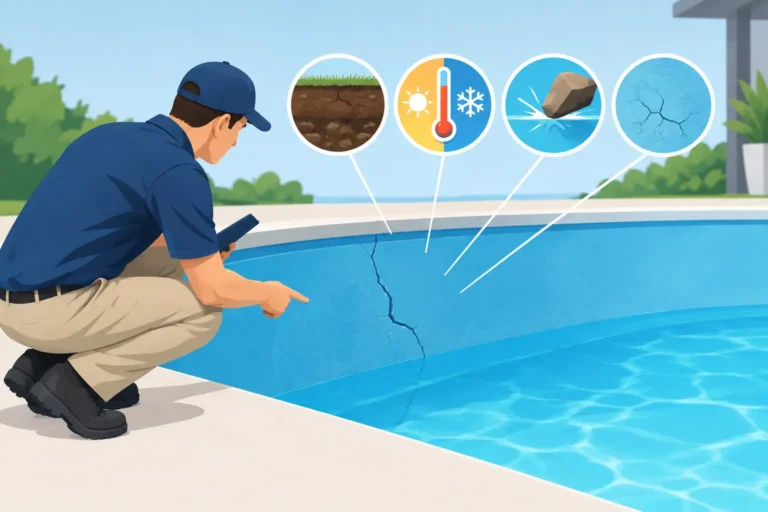
A thin line in a fiberglass pool can look harmless until the water level begins dropping, the line spreads, or the area feels soft underfoot. Effective fiberglass pool crack repair is not just a matter of filling a visible mark. The repair must address whether the damage is limited to the finish or points to movement, water pressure, plumbing trouble, or a leak behind the shell.
For Georgia pool owners, getting that distinction right can prevent a small repair from becoming a larger shell, plumbing, or deck issue. A qualified inspection provides answers before anyone starts sanding, patching, or draining the pool.
Not Every Fiberglass Pool Crack Means the Same Thing
Fiberglass pools are built with multiple layers, including the gelcoat finish and the structural fiberglass beneath it. A surface-level gelcoat crack may be mostly cosmetic, while a deeper crack can allow water to reach underlying layers or indicate that the shell is under stress. They can look similar from above the waterline, which is why appearance alone is not enough to determine the repair.
Fine, web-like lines in the finish are often called crazing. They may develop from age, sun exposure, chemical imbalance, or normal expansion and contraction. A single linear crack, a crack that continues below the waterline, or an area that feels flexible deserves more attention. So does a crack that appears near a return fitting, skimmer, light, steps, or the pool floor.
Water loss changes the urgency. Evaporation is normal, especially during hot Georgia weather, but a pool that loses water consistently or stops losing water at a particular level may have a leak. The visible crack may be the source, but it could also be a clue that the leak is at a fitting, plumbing line, or another part of the pool system.
Why Fiberglass Pool Crack Repair Begins With Testing
A repair that looks clean but does not stop water loss is not a completed repair. Before recommending fiberglass pool crack repair, a technician should inspect the shell, surrounding deck, waterline fittings, plumbing, and equipment. The goal is to identify both the damaged area and the reason it developed.
Dye testing can help determine whether water is being drawn through a crack, around a fitting, or through a suspected void. During this process, a small amount of dye is placed near the area while the water is still. If the dye moves toward a specific point, it can help confirm active water movement.
Pressure testing evaluates the pool’s underground plumbing lines. If a return or suction line will not hold pressure, the water-loss issue may be in the plumbing rather than the fiberglass shell. Acoustic listening equipment can then help pinpoint a hidden plumbing leak without treating the entire pool area as a guesswork excavation project.
A detailed inspection also looks for shell movement and conditions around the pool. Soil settlement, poor drainage, groundwater pressure, deck movement, and shifting backfill can all place stress on a fiberglass shell. Fixing a crack without correcting a drainage or structural concern may leave the pool vulnerable to repeat damage.
What a Proper Repair May Involve
The right repair scope depends on the crack depth, location, cause, and whether the pool is actively leaking. Small finish defects can sometimes be repaired by carefully preparing the surface, applying compatible materials, and color-blending the repaired area. The work needs proper surface preparation. A patch placed over contaminated, wet, or unstable material is unlikely to hold or blend well.
For a deeper crack, the damaged material may need to be opened, dried, and rebuilt in layers using compatible fiberglass repair materials. The repaired section is then finished with gelcoat or another appropriate surface coating. This process restores more than appearance. It is intended to rebuild the integrity of the affected section and seal it against water intrusion.
Repairs around penetrations such as lights, skimmers, returns, and drains require additional care. Sometimes the issue is a failed gasket, fitting seal, or plumbing connection rather than the shell itself. Repairing the fiberglass while leaving a leaking fitting in place can create confusion when water loss continues.
Color matching is another practical consideration. Even a technically sound repair can be noticeable, particularly in older pools where the original finish has faded. A reputable contractor should set expectations about how closely the repaired area can blend and whether a broader refinishing option makes sense for the pool’s age and overall condition.
When to Act Instead of Watching the Crack
A small, stable surface mark can sometimes be monitored after an inspection confirms there is no leak or structural concern. Waiting is less appropriate when the crack is widening, feels raised or soft, appears near a fitting, or is accompanied by unexplained water loss. Water behind the finish can lead to staining, blistering, or delamination, making a localized repair more involved later.
Call for an inspection promptly if you notice the water level falling below a return, skimmer opening, or light. Also pay attention to wet or unusually soft ground near the pool, air bubbles in the system, frequent need to add water, or a sudden change in chemical demand. These signs do not prove that the shell is cracked, but they justify professional testing.
Avoid draining a fiberglass pool without guidance. An empty pool can be vulnerable to groundwater pressure and may shift or lift in certain conditions. It can also make an existing problem worse if the underlying cause has not been identified.
Can You Use a DIY Fiberglass Crack Patch?
A do-it-yourself patch may be tempting for a tiny above-waterline finish chip, particularly if the area is dry and the pool has no water-loss symptoms. The trade-off is that a store-bought kit does not diagnose the cause, verify that the crack is superficial, or address a hidden leak. Material compatibility, surface preparation, cure conditions, and color matching all affect the result.
DIY repair is a poor fit for cracks below the waterline, damage around fittings, soft spots, recurring cracks, or any situation involving water loss. Those conditions call for diagnostic work first. Spending money on a cosmetic patch can delay the repair that actually protects the pool.
Questions Homeowners Often Ask
Will a fiberglass pool crack always leak?
No. Some cracks are limited to the gelcoat finish and do not reach a layer that allows water to escape. Others do leak, especially if they extend through the fiberglass layers or occur around a penetration. Testing is the dependable way to separate a cosmetic concern from an active leak.
How much does fiberglass pool crack repair cost?
Cost depends on access, crack size and depth, whether water loss is involved, the location of the damage, and whether drainage, plumbing, or fitting repairs are also needed. A clear estimate should follow the diagnostic findings, not come from a photo alone. That approach helps homeowners understand what is being repaired and why.
How long does the repair take?
A straightforward surface repair may be completed quickly, while a deeper repair can require drying time, layered fiberglass work, finishing, and curing. Leak testing and related plumbing repairs can add time, but they are often what prevents a return visit for the same water-loss problem.
Coastal Pool Repairs and Leak Detection provides the testing and repair capability needed to move from an unexplained crack or falling water level to a documented repair plan. If a line in your fiberglass shell has changed, or your pool is losing water, acting before the damage spreads gives you more repair options and a clearer path back to enjoying the pool.
