

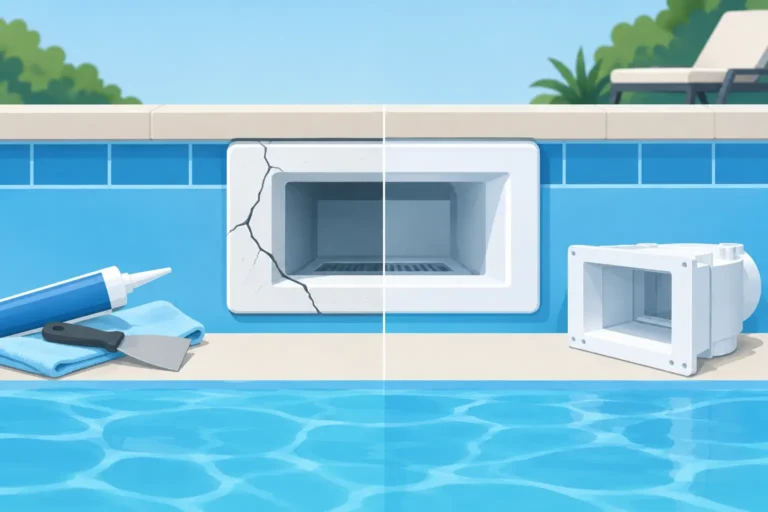
A pool can lose a surprising amount of water through a cracked skimmer, even when the crack looks minor from the surface. Pool skimmer crack repair is not simply a matter of applying sealant and hoping the water level holds. The skimmer connects the pool shell to the circulation plumbing, so a crack may involve the plastic body, the throat where the skimmer meets the pool wall, or a fitting below the deck.
For Georgia pool owners, the right repair starts with confirming exactly where the water is leaving. A visible crack is useful evidence, but it is not always the entire problem. Accurate testing prevents a temporary patch from masking a failed line, a leaking fitting, or movement around the skimmer opening.
Why pool skimmer cracks cause water loss
The skimmer draws surface water into the filtration system. Its body is set into the pool wall, and plumbing lines connect to its bottom or back. Over time, shifts in soil, deck movement, freeze-thaw cycles, aging plastic, and stress at the plumbing connection can create cracks.
In concrete pools, a common trouble spot is the joint between the skimmer throat and the pool shell. The surrounding plaster or tile may look separated, or the skimmer faceplate may show gaps. In fiberglass and vinyl liner pools, leaks can also develop around gaskets, faceplates, screws, or the skimmer housing itself. The repair approach depends on the pool type and the exact source of the leak.
A crack above the waterline may not leak continuously. Once the water falls below the crack, the loss may slow or stop. A crack lower in the skimmer body can leak whether the pump is running or not. If water loss increases when the pump runs, a pressure-side or suction-side plumbing issue may be involved as well.
Signs your skimmer needs inspection
A falling water level is the most obvious warning sign, but it helps to look for patterns. If the water repeatedly settles near the bottom of the skimmer opening, the skimmer assembly deserves attention. A pool that loses water faster while the equipment is operating may have a crack or failed fitting exposed to suction.
Other signs include air bubbles returning through the pool jets, a pump that loses prime, reduced skimming action, damp soil near the equipment or pool edge, and visible cracking around the skimmer lid or throat. In some cases, the leak is hidden below the deck and has no obvious surface symptoms.
Evaporation can complicate the picture, especially during hot, dry Georgia weather. A basic bucket test can help separate normal evaporation from an active leak, but it cannot identify the location. If the pool is losing more water than the bucket, professional testing is the next practical step.
Pool skimmer crack repair begins with diagnosis
A dependable repair should be based on evidence, not assumptions. A technician may begin with a detailed inspection of the skimmer body, faceplate, throat, fittings, plumbing connections, and nearby pool surface. Dye testing can reveal whether water is being drawn through a visible crack or gap.
Pressure testing is often necessary when the skimmer plumbing may be leaking. The line is isolated and tested to determine whether it holds pressure. Acoustic listening equipment can help locate underground line leaks without unnecessary excavation. Depending on the pool and conditions, thermal imaging or a shell inspection may add useful information.
This process matters because several leaks can create similar symptoms. For example, a leak at the skimmer throat may appear to be a damaged skimmer body. A cracked suction line beneath the deck may cause air in the pump basket, even when the skimmer itself looks worn. Identifying the source before work begins helps control the repair scope and gives the homeowner a clear explanation of the recommended solution.
When sealing a skimmer crack is appropriate
Some cracks can be repaired without replacing the entire skimmer. A localized, stable crack in an accessible area may be prepared and sealed with a pool-rated repair material. Minor separation at the skimmer throat in a concrete pool may also be repaired by removing deteriorated material, rebuilding the joint, and finishing the surrounding surface as needed.
A repair is more likely to hold when the skimmer body remains structurally sound and there is no continuing movement at the pool wall or plumbing connection. The preparation is just as important as the sealant. The area must be clean, dry when required by the product, and properly opened or prepared so the repair material can bond.
Temporary underwater epoxy products have a place for small emergency patches, particularly when stopping water loss quickly is the priority. They should not be treated as a guaranteed long-term solution for a split skimmer body, failed gasket, or plumbing defect. A patch that stops the visible leak can still leave hidden issues unresolved.
When skimmer replacement is the safer choice
Replacement is often the better investment when the skimmer plastic is brittle, cracked in several places, distorted, or separating from the plumbing connection. It may also be recommended when previous patch attempts have failed or when the skimmer throat has significant deterioration around it.
Replacing a skimmer can require careful access to the pool wall and, in some cases, the surrounding deck. That sounds disruptive, but continued water loss can create larger problems. Water moving behind a pool wall, beneath decking, or around plumbing can wash out soil and contribute to settlement. Addressing the source early is usually less costly than repairing damage caused by a long-running leak.
For vinyl liner pools, skimmer replacement needs special care to protect the liner and maintain a watertight faceplate seal. For concrete pools, the work may include removing and restoring plaster, tile, or coping around the opening. A qualified repair plan should explain what will be opened, what will be repaired, and what finish restoration is included.
What affects pool skimmer repair cost?
There is no responsible flat price for every skimmer leak because the cost depends on the diagnosis and access. A straightforward crack repair above the waterline is very different from replacing a skimmer connected to damaged plumbing under a concrete deck.
The main cost factors are the type of pool, the location and size of the crack, whether plumbing repairs are needed, accessibility around the skimmer, and the amount of surface restoration required afterward. A technician should separate diagnostic findings from repair recommendations so you can understand why a repair is being proposed.
At Coastal Pool Repairs and Leak Detection, the goal is to document the issue, explain the options, and provide a clear estimate before repair work moves forward. That is especially valuable when a skimmer problem has more than one possible cause.
How to protect the pool while you wait for repair
Do not let the water level drop below the skimmer opening if the pump is running. Low water can pull air into the suction line, cause the pump to lose prime, and potentially damage equipment. If the level is approaching the bottom of the skimmer, turn the pump off until the system can be assessed.
Avoid repeatedly adding water without monitoring the loss. Fresh water can dilute chemicals and raise operating costs while the leak continues. Keep a simple record of the water level, whether the pump was on or off, and any changes in loss rate. Those details can help speed up the diagnostic visit.
Do not use expanding foam, household caulk, or unapproved adhesives inside the skimmer. These materials can interfere with proper repair, clog plumbing, and make it harder to inspect the original damage.
Questions homeowners often ask
Can I use pool putty to repair a cracked skimmer?
Pool putty may slow a small, accessible leak as a short-term measure. It is not a substitute for diagnosing the crack, especially if the skimmer body is deteriorated or the leak is at a plumbing connection. The right product and surface preparation depend on whether the repair is underwater and on the skimmer material.
Will a skimmer crack cause the pump to lose prime?
It can. A crack or leak on the suction side may allow air into the system while the pump runs. You may see bubbles in the pump basket, weak flow from return jets, or a pump that struggles to maintain prime. Pressure testing and inspection can determine whether the skimmer or its line is responsible.
Do I need to drain the pool for a skimmer repair?
Not always. Many repairs can be performed with the water level lowered below the work area. Full draining is only appropriate in specific situations and should be planned carefully, since an empty pool can face structural risks depending on its construction and groundwater conditions.
A cracked skimmer is worth addressing before a manageable leak becomes a deck, plumbing, or equipment problem. The most useful next step is a focused inspection that identifies where the water is going and matches the repair to the condition of your pool.
